
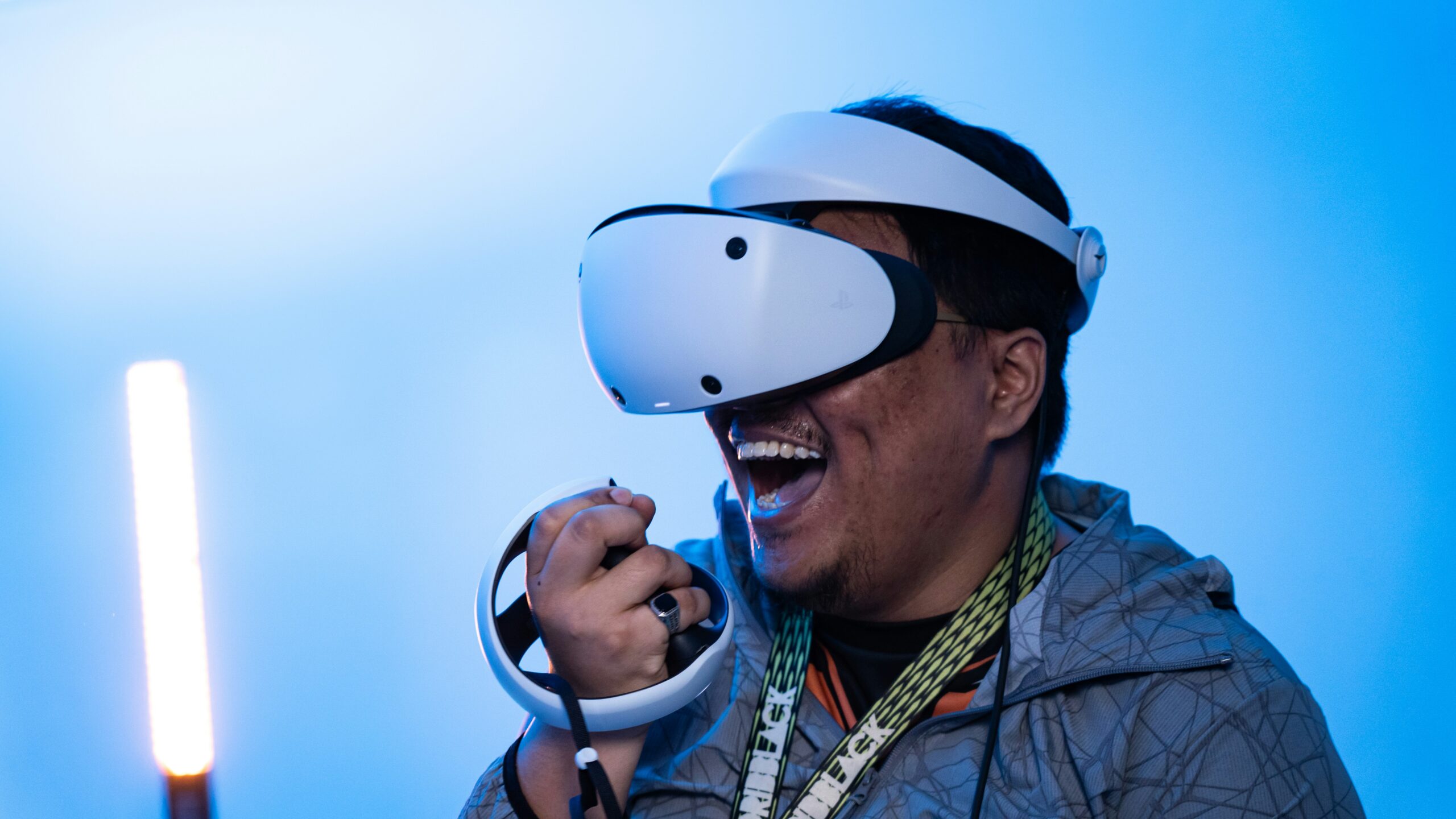



Healthcare AR and VR only make sense when they solve a real problem. A training team may need safer practice for rare procedures. A patient education team may need a clearer way to explain treatment. A hospital may need a better way to prepare staff without adding more pressure to physical labs.
That is why the best AR and VR development companies for healthcare usually bring more than 3D skills. They understand clinical workflows, user comfort, content accuracy, and testing. The list below includes different types of healthcare AR and VR teams, from custom XR studios to simulation and therapy-focused platforms.
Healthcare Teams Building Better AR And VR In Healthcare
1. Treeview Studio
Treeview is a good fit for healthcare teams that need custom spatial software, not an off-the-shelf product. The studio builds enterprise AR, VR, and MR apps, with healthcare work such as Medtronic’s Micra XR Trainer, Daiichi Sankyo’s CardioCompass, and Inviewer. Its portfolio also includes Microsoft, ULTA Beauty, and NEOM, giving buyers more proof than a standard XR services page.
The main reason Treeview fits healthcare is its product-studio model. It can take a project from experience design through engineering and rollout, which matters when medical content, device constraints, and user comfort all have to work together.
2. Lucid Reality Labs
Lucid Reality Labs is one of the more healthcare-focused XR studios on this list. Its public materials point to work across healthcare, MedTech, pharma, education, and high-stakes training, with services that cover immersive simulations, 3D content, and VR medical education. That makes it a natural name to shortlist when comparing healthcare VR development companies for training or clinical communication.
The company also has solid proof behind the work. Clutch highlights a medical technology project where the team handled software development, QA, moved a therapy program to a new VR headset, and suggested product improvements.
3. Osso VR
Osso VR does not try to cover every healthcare use case. It is built for surgical training, where repetition matters and mistakes in real life are costly. Hospitals, medical device teams, and education programs use this kind of VR technology in healthcare to help clinicians practice procedures before they work with patients.
The company’s main value is practical repetition. Instead of trying to cover every possible XR use case, Osso VR stays close to surgical performance, procedure familiarity, and training that can happen outside the operating room.
4. FundamentalVR
Surgical practice is where FundamentalVR feels most relevant. Its HapticVR system does not stop at showing a procedure on screen — it lets users feel things like tissue, bone, and tool movement while they train. For teams looking at VR in healthcare, that touch element is the reason it feels different from a regular simulation tool.
It is a better fit for hands-on training than for general patient education. Medical device companies and surgical training teams can use it when the goal is to repeat the same steps, build confidence, and reduce mistakes before work starts with real patients.
5. SimX
SimX is a VR medical simulation platform for hospitals, nursing schools, EMS programs, and military medical teams. Its virtual patient scenarios support nurses, physicians, first responders, and advanced providers, which makes it one of the more practical VR healthcare companies for broad clinical training.
The platform works well when one training team needs content for several roles. It can support routine practice, emergency scenarios, and high-pressure decision-making without being tied to one narrow specialty.
6. GigXR
GigXR works in holographic healthcare training, with mixed reality applications for anatomy, clinical simulation, and patient-care scenarios. Its platform includes HoloHuman and HoloScenarios, and its materials describe shared immersive simulations where learner decisions can change a holographic patient’s condition. For education teams planning AR/VR in healthcare, that collaborative angle is useful.
The company also has visible academic and clinical training signals. Its HoloScenarios work has been tied to institutions such as the University of Cambridge, Cambridge University Hospitals, and NUS Medicine, which adds practical credibility beyond product claims.
7. AppliedVR
Therapeutic VR is where AppliedVR clearly separates itself from the studio-style companies on this list. Its RelieVRx program is described as an FDA-authorized prescription VR medical device for chronic lower back pain, designed as a non-opioid treatment option. That makes the company a strong healthcare example where immersive technology moves from training into patient care.
The proof is unusually concrete. FDA materials classify the product type as a virtual reality behavioral therapy device for pain relief, which gives AppliedVR a level of regulatory grounding that many XR companies do not have.
Choosing The Right Healthcare XR Partner
The right choice depends on the problem.
A good vendor should understand the clinical setting, not just the headset. Ask how they handle validation, medical review, learner safety, hardware rollout, and updates after launch. The strongest partners turn immersive ideas into tools people can actually use in care, education, and practice.