
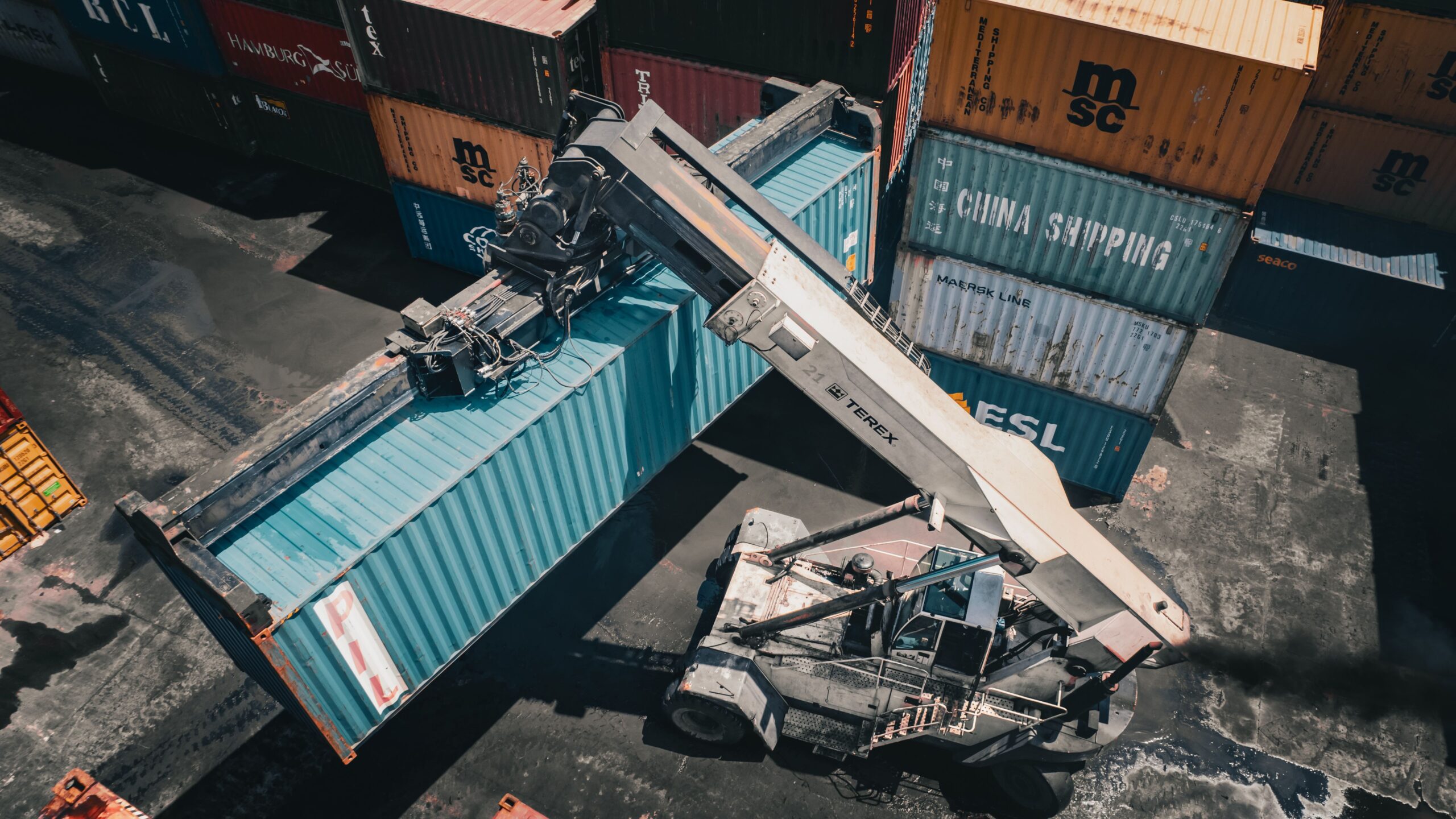



A warehouse that trains new pickers with a binder and a shadow shift is going to keep losing time to mistakes and turnover, no matter how good the layout is. XR development companies are closing that gap by building AR-guided picking and VR-based onboarding that get new hires productive faster and cut error rates on the floor. DHL’s own vision-picking rollout, covered in AIMultiple’s research on AR in manufacturing, reported productivity gains of 15 to 25 percent in order picking tasks once hands-free AR guidance replaced paper lists and scanners.
If your team is evaluating vendors for warehouse operations, read on. Our list of the best XR development companies for logistics and supply chain will help you choose the right fit.
| Company | Location | Focus Area | Platforms |
|---|---|---|---|
| Treeview | United States | Custom VR training matched to a facility’s real layout | Meta Quest, HoloLens |
| Transfr | United States | Workforce-development VR for logistics training pathways | Meta Quest |
| Pixo VR | United States | Content-library VR for warehouse safety compliance | Meta Quest, cloud-managed headsets |
| Taqtile | United States | AR step-by-step guidance for frontline workers | HoloLens, mobile AR |
| Euphoria XR | United States | Custom AR/VR consulting for supply chain operations | Meta Quest, mobile AR |
Top XR Providers for Warehouse and Supply Chain Operations
1. Treeview
Generic warehouse training templates fall apart the moment a new hire faces a rack configuration or forklift model that doesn’t match what they practiced on, which is the exact problem Treeview built its approach around. The studio models the specific racking, forklift types, conveyor systems, and safety checkpoints of each client’s actual facility rather than relying on a stock warehouse environment.
That level of customization takes longer to build than an off-the-shelf module, but it pays off for operators with unusual layouts or specialized equipment where generic training would leave gaps.
- Focus area: Custom VR training matched to a facility’s real layout
- Platforms: Meta Quest, HoloLens
- Best fit: Facilities with non-standard layouts or equipment
2. Transfr
Employers hiring from outside their existing workforce, rather than upskilling people already on staff, are where Transfr’s model works best. The platform partners with community colleges and workforce development boards to build a training pathway that starts before someone is even hired, covering material handling, forklift operation, and warehouse safety basics for people with little to no prior experience.
That external-pipeline focus makes Transfr a stronger fit for high-turnover operations building a hiring funnel than for a single facility looking to retrain existing staff.
- Focus area: Workforce-development VR for logistics training pathways
- Platforms: Meta Quest
- Best fit: Employers building external hiring pipelines
3. Pixo VR
Safety and L&D teams managing training across a distributed network of warehouses need something faster to deploy than a bespoke simulation build, and that’s the gap Pixo VR fills with its content library. Its catalog covers forklift safety, loading dock procedures, hazard communication, and OSHA compliance topics, all managed through a cloud platform that lets teams assign and track completion across multiple sites at once.
Because Pixo VR leans on pre-built content rather than facility-specific modeling, it trades some customization for speed, which tends to favor operators managing many sites over a single flagship facility.
- Focus area: Content-library VR for warehouse safety compliance
- Platforms: Meta Quest, cloud-managed headsets
- Best fit: Multi-site networks needing fast, trackable rollout
4. Taqtile
Workers troubleshooting equipment they’ve never seen before are the reason Taqtile built its Manifest platform around step-by-step AR guidance rather than pre-recorded training. Instead of sitting through a module before the job, a worker sees interactive instructions overlaid directly on the equipment in front of them, letting experienced staff knowledge get captured and reused without needing a formal training session.
That real-time guidance model is a different tool than a VR training simulator, and it tends to fit operations more focused on reducing errors during live work than on onboarding new hires.
- Focus area: AR step-by-step guidance for frontline workers
- Platforms: HoloLens, mobile AR
- Best fit: Teams needing live, on-the-job guidance over pre-training
5. Euphoria XR
Supply chain operators without an in-house sense of what XR should even look like for their business are better served by a consulting-led studio than a pre-built platform, which is where Euphoria XR positions itself. The team works through concept and experience mapping before building anything, aiming to match the AR or VR approach to a client’s actual operational pain point rather than defaulting to a generic training module.
That consulting-first process takes more time upfront than picking a template off a shelf, but it suits operators who aren’t yet sure whether their problem calls for AR guidance, VR training, or something else entirely.
- Focus area: Custom AR/VR consulting for supply chain operations
- Platforms: Meta Quest, mobile AR
- Best fit: Operators still defining their XR strategy
Choosing the Right Partner
The right fit here comes down to whether the problem is onboarding speed, live-guidance accuracy, or multi-site training consistency. A content-library platform and a fully custom facility simulation solve different budgets and different timelines, so it’s worth being honest about which constraint matters more before comparing vendors.
Ask for a pilot on a single site or shift before rolling anything out network-wide, since the biggest failures in warehouse XR tend to show up in the handoff between the simulation and the actual floor. Teams evaluating vendors for warehouse operations should also take a look at XR partners serving architecture and construction firms, since facility design and facility operations increasingly share the same visualization technology under the hood.
Bookmark this guide to make a well-informed decision. If you want to add your company to this list, drop us a line or submit a form in the Best Choices section. After a thorough review, we’ll decide whether it’s an appropriate addition.