
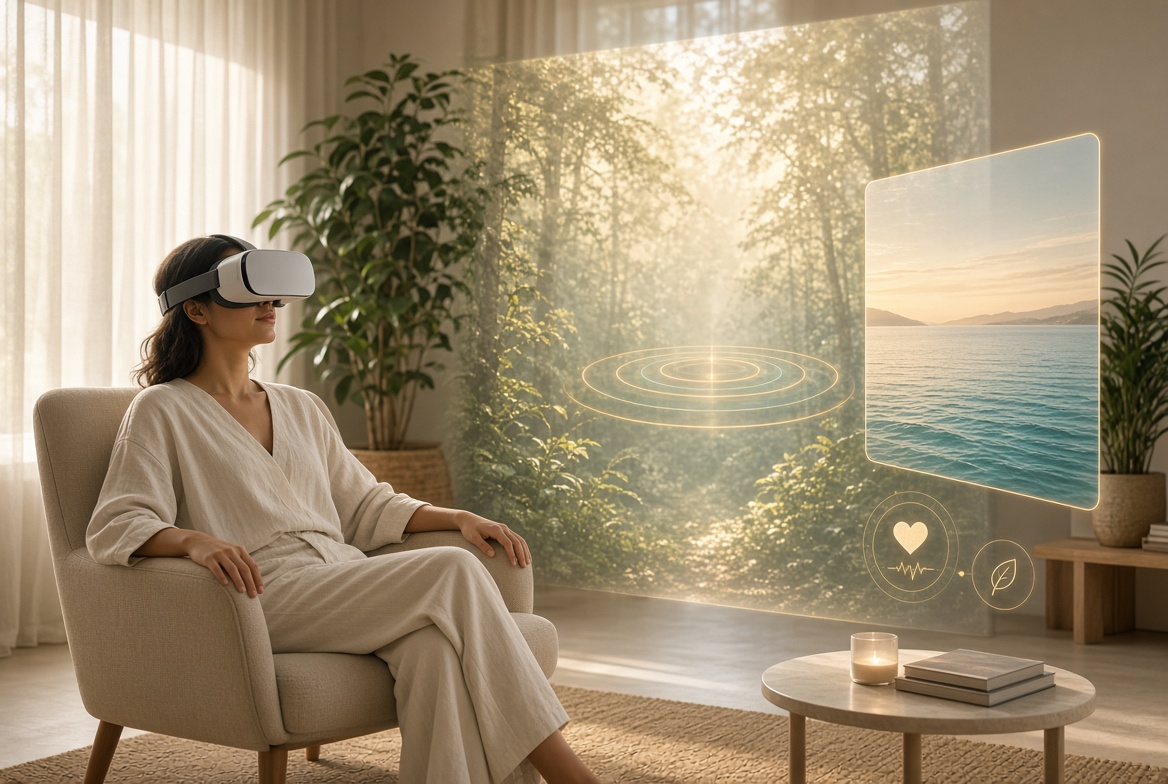



Virtual reality has a stronger clinical footing in mental health than in most areas people associate it with. Exposure therapy was one of the first uses anyone tried, for a straightforward reason: a controlled virtual environment lets a clinician adjust the intensity of an exposure precisely, repeat it as often as needed, and deliver it in a consulting room rather than out in the world. Refusal rates for virtual exposure are dramatically lower than for the equivalent in-vivo work, which matters when the alternative is a patient declining treatment altogether.
The commercial picture has changed sharply in the last few years, in two ways buyers need to understand. Reimbursement arrived, with CMS recognizing a HCPCS code for VR cognitive behavioural therapy devices and Category III CPT codes now covering virtual reality procedural applications. And the market consolidated hard, with several well known names absorbed into larger platforms. Anyone working from a vendor list more than a year old will be contacting companies that no longer operate independently.
The companies below split into regulated therapeutics, clinician facing therapy platforms, wellness and senior care providers, and development studios building custom clinical applications. Products in this space support professional care rather than replace it, and regulatory status varies considerably between them, so verify clearance for your intended use rather than assuming it.
VR Development for Mental Health and Wellness at a Glance
| Company | Best For | Delivery Model |
|---|---|---|
| Treeview | Custom clinical and behavioural health applications | Custom development |
| XRHealth | End to end therapeutic platform with reimbursement pathways | Platform and virtual clinic |
| AppliedVR | Authorized therapeutics delivered at home | Regulated therapeutic |
| Oxford VR | Automated therapy for serious mental illness | Digital therapeutic |
| PsyTech VR | Broad environment libraries for practising clinicians | Platform |
| oVRcome | Self guided phobia and anxiety programs | Consumer therapeutic |
| Rendever | Older adults, memory care and isolation | Platform and content |
| MyndVR | Senior living engagement programs | Platform and content |
| TRIPP | Mindfulness and everyday wellness | Consumer wellness |
| Lucid Reality Labs | Custom builds with outcome analytics | Custom development |
Best VR Development Companies for Mental Health and Wellness
1. Treeview – Custom Clinical VR Built by a Studio With Medical Device Experience
Most organizations in this space sell a product. Treeview builds what the products do not cover, which is the right approach when a protocol is proprietary, a research programme needs an instrument that does not exist, or a health system wants an application shaped around its own care pathway rather than around a vendor’s roadmap.
The credential that matters here is regulated healthcare delivery. Treeview has built immersive applications for Medtronic and Daiichi Sankyo, and worked with Stanford Medicine, which means the team has operated inside medical device and pharmaceutical constraints rather than encountering them for the first time on your project. Its stated healthcare practice covers medical training, patient education and clinical workflow, and the studio can develop custom VR applications for exposure based therapeutic work including PTSD protocols. For clinical research groups, that combination of therapeutic understanding and regulated engineering discipline is unusual in a studio of this size.
Two structural points favour clinical buyers. Clients retain full ownership of intellectual property, source code and assets, which is close to essential when an application embodies a protocol a research group intends to publish, license or take through regulatory review. And long term support covering platform migrations addresses the awkward reality that a clinical study can outlast the headset generation it began on.
- Services and expertise: Custom VR, AR and mixed reality development, AR and VR healthcare applications, medical training and patient education, spatial product design, 3D content creation, long term support and platform migration
- Location: New York, United States and Montevideo, Uruguay
- Portfolio: Medtronic, Daiichi Sankyo, Stanford Medicine, Microsoft, Meta, University of Alberta
2. XRHealth – The Consolidated Platform With a Reimbursement Route
XRHealth has become the centre of gravity in this market through acquisition as much as development. The Boston based company operates a virtual clinic model combining extended reality technology, licensed clinicians and data analytics, on a platform with FDA and CE registered medical technology behind it.
Its scope grew substantially through consolidation. Amelia Virtual Care, formerly Psious, merged into XRHealth, bringing a library of more than fifty validated environments for exposure therapy across phobias, anxiety disorders and PTSD, used by thousands of therapists across Europe and Latin America. BehaVR, which had earlier merged into RealizedCare, was acquired in early 2025. Buyers evaluating any of those names individually are now evaluating XRHealth.
The practical advantage is reimbursement. Medicare approval for remote therapeutic monitoring through the platform turns VR delivered care from a capital purchase into billable activity, which is the change that moves adoption from innovation budgets into operations.
- Services and expertise: Therapeutic XR platform, virtual clinic services, exposure therapy environment library, remote therapeutic monitoring, clinician tooling and analytics
- Location: Boston area, United States, with operations in Spain and Israel
3. AppliedVR – Authorized Therapeutics Delivered in the Patient’s Home
AppliedVR, based in Los Angeles and founded in 2015, built RelieVRx, a virtual reality therapeutic authorized by the FDA for chronic lower back pain. The programme combines cognitive behavioural therapy with mindfulness based intervention across sequenced modules delivered at home rather than in a clinic.
Its inclusion on a mental health list is deliberate. The mechanism is behavioural and cognitive, drawing on CBT and acceptance and commitment therapy principles, and the same content architecture extends to anxiety and stress. Chronic pain and mental health are clinically entangled, and a programme that reduces reliance on medication while teaching coping skills sits in both categories.
What distinguishes AppliedVR is regulatory seriousness. The company has run extensive clinical trials to support its claims, which is the standard any buyer should apply when a vendor describes a product as therapeutic rather than as wellness.
- Services and expertise: Regulated VR therapeutics, at-home programme delivery, CBT and mindfulness based intervention, clinical evidence generation
- Location: Los Angeles, United States
4. Oxford VR – Automated Therapy for Serious Mental Illness

Oxford VR develops evidence based immersive treatments for serious mental illness, with clinically validated programmes addressing conditions including height phobia and social anxiety, built on research originating in academic psychology rather than in software product development.
Its distinguishing design decision is automation. Rather than giving a therapist a set of environments to run, the programmes deliver much of the therapy through a virtual coach, which changes the economics fundamentally. Access to psychological therapy is limited by clinician availability more than by anything else, and a treatment that works with reduced therapist time addresses the actual bottleneck in mental health provision.
Buyers should ask for the current evidence base and the regulatory position in their own jurisdiction, since clinical validation in one health system does not transfer automatically to another.
- Services and expertise: Automated VR therapy programmes, clinically validated treatment protocols, serious mental illness applications, outcome measurement
- Best suited to: Health systems addressing therapy waiting lists and clinician capacity
5. PsyTech VR – A Broad Environment Library in Clinician Hands
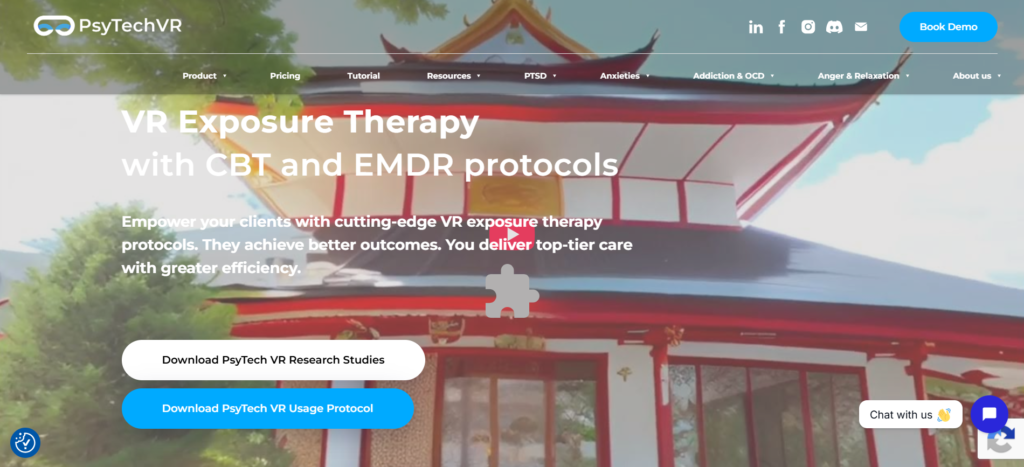
PsyTech VR provides therapeutic virtual reality across multiple conditions, giving practising clinicians a library of environments they control during sessions rather than a fixed automated programme.
That model suits therapists who want VR as an instrument inside their existing practice. A clinician running graduated exposure needs to adjust intensity in response to what they observe in the room, and a library approach preserves that clinical judgement rather than replacing it with a protocol. It also serves practices treating a varied caseload, where a single condition specific product would sit idle much of the week.
As with any clinician facing platform, evaluation should cover the training and support provided alongside the software, since therapists unfamiliar with VR need structured onboarding before the tool improves anything.
- Services and expertise: Multi condition therapeutic VR library, clinician session controls, exposure therapy environments, practice integration and training
- Best suited to: Private practices and clinics treating a mixed caseload
6. oVRcome – Self Guided Programs for Phobias and Social Anxiety
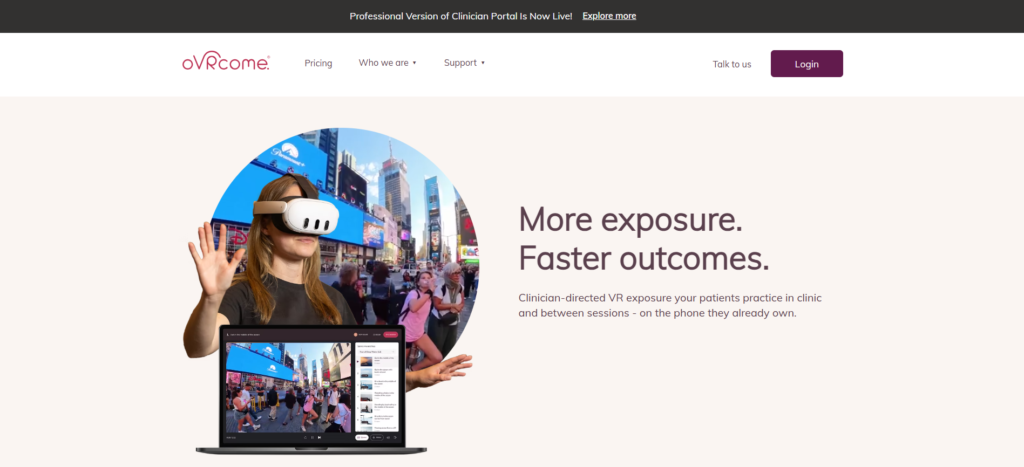
oVRcome delivers structured self guided virtual reality programmes for specific phobias and social anxiety, designed for people to work through independently rather than within a course of therapy.
The case for self guided delivery is reach. A large share of people with treatable specific phobias never present clinically at all, because the condition is manageable by avoidance until suddenly it is not, and the barrier to seeking help is high relative to the perceived severity. A structured programme someone can start on their own reaches that population.
The corresponding limitation is scope. Self guided tools are appropriate for circumscribed conditions with well established treatment protocols, and buyers should be clear about where their population sits before treating this as a substitute for clinical provision.
- Services and expertise: Self guided VR exposure programmes, phobia and social anxiety treatment, progress tracking, consumer and health system distribution
- Best suited to: Employers, insurers and health systems extending access to low intensity intervention
7. Rendever – Immersive Experience Built Around Isolation in Older Adults
Rendever works in senior living and memory care, using virtual reality to address social isolation among older adults, with shared experiences designed for group settings rather than solitary headset use.
The shared design is the substance rather than a detail. Loneliness in older adults is a serious health risk with established links to cognitive decline and mortality, and an intervention that isolates someone inside a headset would work against the goal. Rendever structures sessions so residents experience places together and talk about them afterwards, which makes the technology a prompt for connection instead of a replacement for it.
Reminiscence work is the other application, revisiting meaningful places from a resident’s life, which has particular value in memory care where recall of distant experience often outlasts recent memory.
- Services and expertise: Group VR experiences for senior communities, reminiscence therapy content, memory care applications, family connection features, staff tooling
- Best suited to: Senior living operators, memory care units and aged care providers
8. MyndVR – Wellness Programming Designed for Senior Living Operators
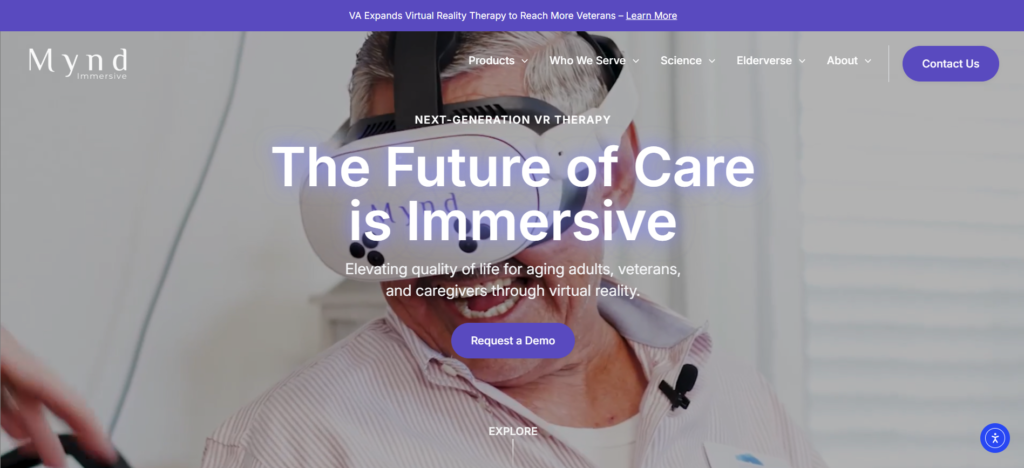
MyndVR provides virtual reality wellness content and programmes for older adults across senior living communities, home care and aged care settings, delivered as a managed programme rather than as software an operator must run themselves.
The operational framing is what distinguishes it. Senior living staff are stretched, frequently changing, and unlikely to become technology administrators, so a vendor supplying hardware, content, training and support as one service removes the failure mode where equipment ends up unused in a storage room within a quarter.
Content breadth matters here more than in clinical products, since this is engagement programming that has to stay fresh for residents encountering it weekly over long periods.
- Services and expertise: VR wellness content for older adults, managed programme delivery, hardware and support, staff training, home and community care deployment
- Best suited to: Senior living and home care operators running ongoing engagement programmes
9. TRIPP – Everyday Wellness Rather Than Clinical Treatment
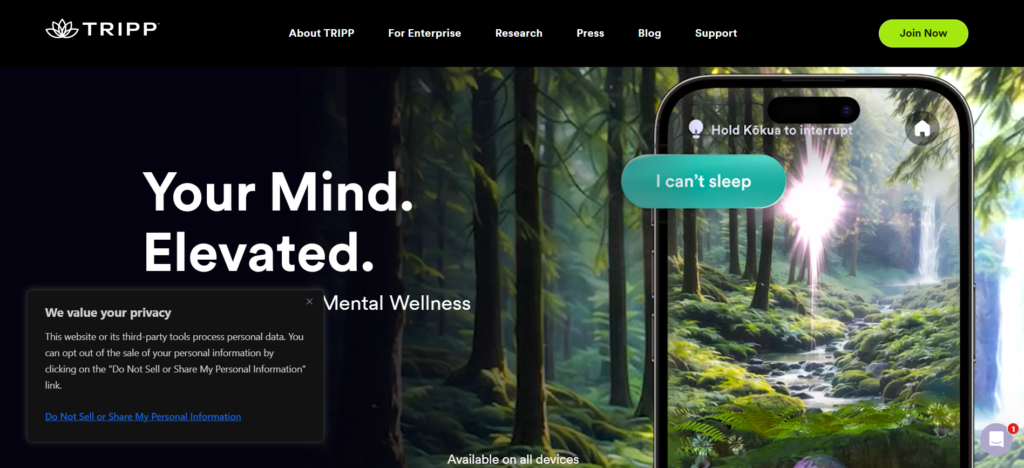
TRIPP is a wellness platform using virtual and augmented reality for mindfulness, focus and mood, positioned squarely as consumer and workplace wellbeing rather than as a medical product.
The distinction is worth stating plainly, because conflating wellness and therapeutics is the most common error in this market. TRIPP is not treating a diagnosed condition and does not claim to. It supports mindfulness practice, and the reason it belongs on this list is that a substantial share of organizational spending in this area is preventive wellbeing rather than clinical care, and buyers in that category are poorly served by products designed for clinics.
For employers building wellbeing provision, the practical questions are engagement over time and whether the offering reaches people who would not otherwise use anything.
- Services and expertise: VR and AR mindfulness and meditation, mood and focus programmes, consumer distribution, workplace wellbeing deployment
- Best suited to: Employers and consumer wellbeing programmes rather than clinical settings
10. Lucid Reality Labs – Custom Development With Measurement Built In
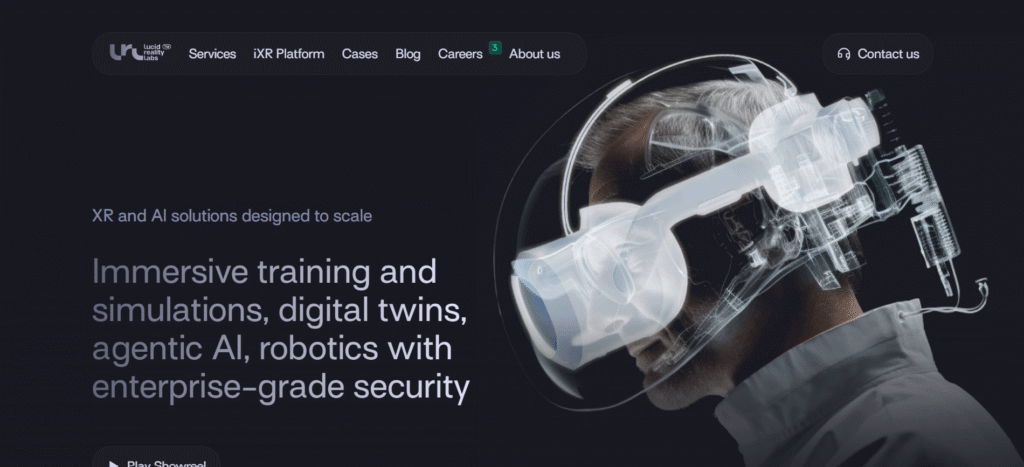
Lucid Reality Labs builds immersive applications across healthcare, life sciences, aerospace and manufacturing, with a proprietary iXR platform pairing immersive content with analytics so outcomes are measured rather than assumed.
For mental health work the analytics layer is the relevant part. Any organization deploying VR in a care pathway will eventually be asked what changed, and applications built without measurement designed in from the start cannot answer. The team’s life sciences background also means familiarity with documentation and validation expectations that clinical deployments attract.
They work with Fortune 500 organizations across healthcare, training and enterprise programmes, with much of the client roster not publicly disclosed, which is common for clinical engagements.
- Services and expertise: Custom XR, VR and AR development, iXR platform with outcome analytics, simulation, 3D content, enterprise and clinical training programmes
- Location: Miami, United States, with presence in Europe and Southeast Asia
How to Choose a VR Partner for Mental Health and Wellness
Is this a therapeutic claim or a wellness offering?
This determines everything downstream: regulatory obligations, evidence expectations, professional oversight and reimbursement. A product treating a diagnosed condition needs clearance appropriate to your jurisdiction and clinical evidence supporting the specific claim. A wellbeing product needs neither, and should not be described as though it does. Vendors blurring the line deserve harder questions, not fewer.
What does the clinical evidence actually cover?
Ask which condition was studied, in what population, against what comparator, and whether results are peer reviewed. Evidence for VR exposure therapy in specific phobias is considerably stronger than for broader claims, and a study demonstrating benefit for one condition says little about another. Vendors with genuine trial programmes will answer precisely, since precision is the point of running them.
Who supervises the person using it?
Clinician led, clinician supported and self guided are three different care models with different safety implications. Establish what happens when someone becomes distressed during a session, what escalation exists, and who is accountable. This question matters most in exactly the deployments where it is least often asked, which is unsupervised access at home or in a workplace.
Is the vendor still an independent company?
This market has consolidated heavily, with several prominent names absorbed into larger platforms in the last three years. Confirm current corporate status, which product line survived the transaction, and what support commitments carried over. Shortlists assembled from articles more than a year old routinely include companies that no longer exist as buyers imagine them.
Who owns the protocol if you build something custom?
For custom development, settle ownership of source code, assets and any clinical content before proposals. Research groups and health systems frequently need to publish, license or seek regulatory review for what they built, and each of those becomes complicated when a studio retains rights. Ask about long term support too, since a clinical programme will likely outlast the hardware generation it started on.
Conclusion
Mental health is where virtual reality has its strongest clinical foundation and, increasingly, a reimbursement pathway to match, but the market demands more care from buyers than most because the gap between a regulated therapeutic and a wellness app is invisible in marketing material and decisive in practice. Regulated therapeutics suit organizations treating diagnosed conditions and able to support the evidence and oversight that entails, clinician facing libraries suit practices wanting VR as an instrument inside existing therapy, senior care providers serve a population whose needs are social as much as clinical, and custom studios are the answer when a protocol or pathway is genuinely your own. Treeview is the strongest option in that final category, with medical device and pharmaceutical delivery experience behind it and full transfer of source code and assets so the protocol you fund remains yours to publish, license or take forward. Whichever route fits, verify regulatory status for your specific intended use, confirm each vendor still operates as you think it does, and be explicit about who is supervising the person in the headset.
If you want to add your company to this list, drop us a line or submit a form in the Top Choices section. After a thorough review, we’ll decide whether it’s an appropriate addition.