



Last updated: November 20, 2026
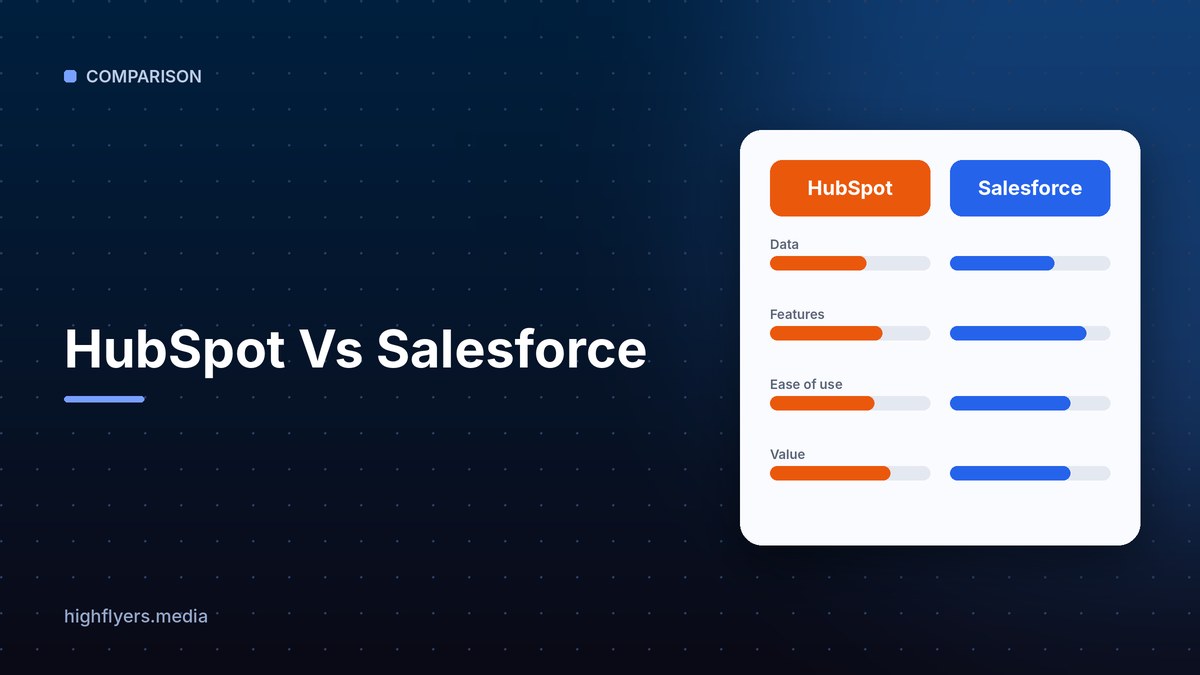
HubSpot is the better choice for small and mid-sized businesses that want an easy-to-use CRM with marketing, sales and service tools in one platform, a free starting tier and fast adoption. Salesforce is the better choice for larger organizations with complex sales processes that need deep customization, advanced reporting, a huge app ecosystem and enterprise-scale controls.
HubSpot Vs Salesforce At A Glance
| Feature | HubSpot | Salesforce |
|---|---|---|
| Free plan | Yes, free CRM | No; free trial only |
| Paid plans | Starter, Professional and Enterprise hubs, per seat | Starter Suite, Pro Suite, Enterprise and Unlimited editions, per user |
| Ease of use | Very easy | Powerful, steeper learning curve |
| Marketing tools | Built in with Marketing Hub | Separate products such as Marketing Cloud and Account Engagement |
| Customization | Good, custom objects on higher tiers | Extensive, with custom objects, code and low-code tools |
| App ecosystem | Large marketplace | AppExchange, the largest CRM ecosystem |
| AI | Breeze AI agents and assistants | Agentforce and Einstein AI |
| Implementation | Days to weeks | Weeks to months, often with a partner |
| Best for | SMBs and fast-moving teams | Mid-market and enterprise sales organizations |
Pricing
HubSpot starts with a free CRM, then sells Marketing, Sales, Service, Content, Operations and Commerce hubs at Starter, Professional and Enterprise levels. Starter is affordable, but Professional and Enterprise tiers add significant costs and onboarding fees, and marketing tiers are also priced by marketing contacts.
Salesforce has no free plan. Its Starter Suite is aimed at small businesses, while Enterprise and Unlimited editions carry higher per-user prices. Add-ons, AI features and implementation partners can raise the total cost substantially.
Verdict: HubSpot is cheaper to start. At enterprise scale, the gap narrows.
Ease Of Use And Adoption
HubSpot is known for a clean, intuitive interface that sales reps adopt quickly. Setup is fast, and most teams do not need a dedicated admin early on.
Salesforce can be tailored to almost any process, but that flexibility means more setup, admin work and training. Many companies hire certified admins or implementation partners.
Verdict: HubSpot wins for ease of use.
Sales Features
Both cover contact and deal management, pipelines, email tracking, sequences, forecasting and reporting. Salesforce goes further with complex territory management, advanced forecasting, CPQ, approval workflows and multi-division setups. HubSpot covers most SMB and mid-market needs with less complexity.
Marketing And Service
HubSpot’s advantage is its unified platform: email marketing, forms, landing pages, ads, social, SEO tools and a help desk share one contact database. Salesforce offers powerful marketing and service clouds, but they are separate products that often require integration work.
Customization And Ecosystem
Salesforce leads here. Custom objects, Flow automation, Apex code and the AppExchange let large organizations model almost any business. HubSpot supports custom objects, workflows and a large app marketplace, which is enough for most growing companies.
Pros And Cons
HubSpot pros: free CRM, very easy to use, marketing, sales and service in one platform, fast setup.
HubSpot cons: costs jump on Professional and Enterprise tiers, contact-based marketing pricing, less deep customization.
Salesforce pros: unmatched customization, enterprise features, largest ecosystem, advanced reporting.
Salesforce cons: steep learning curve, higher total cost, often needs admins or partners.
Which Should You Choose?
Choose HubSpot if you are a small or mid-sized business that wants marketing and sales aligned on an easy platform.
Choose Salesforce if you run a large or complex sales organization that needs deep customization and enterprise controls. For lighter options, see our comparison of Pipedrive and HubSpot.
How We Researched This Guide
We reviewed each vendor’s published editions, pricing structure and product documentation, then compared them on ease of adoption, sales features, marketing and service tools, customization and total cost of ownership. Prices change, so confirm current rates with each vendor.
Frequently Asked Questions
Is HubSpot cheaper than Salesforce?
HubSpot is cheaper to start because of its free CRM and Starter tiers. At higher tiers, both can be expensive, and total cost depends on seats, contacts and add-ons.
Can HubSpot handle enterprise companies?
Yes for many. HubSpot Enterprise serves large teams, though companies with very complex processes often still prefer Salesforce.
Do I need a consultant for Salesforce?
Many companies use a certified partner or admin to implement Salesforce, especially for complex setups.
Conclusion
HubSpot is the best CRM for growing businesses that want simplicity and all-in-one marketing and sales. Salesforce is the best CRM for complex, large-scale sales organizations. Choose based on complexity, team size and the admin resources you have.
