



Last updated: November 20, 2026
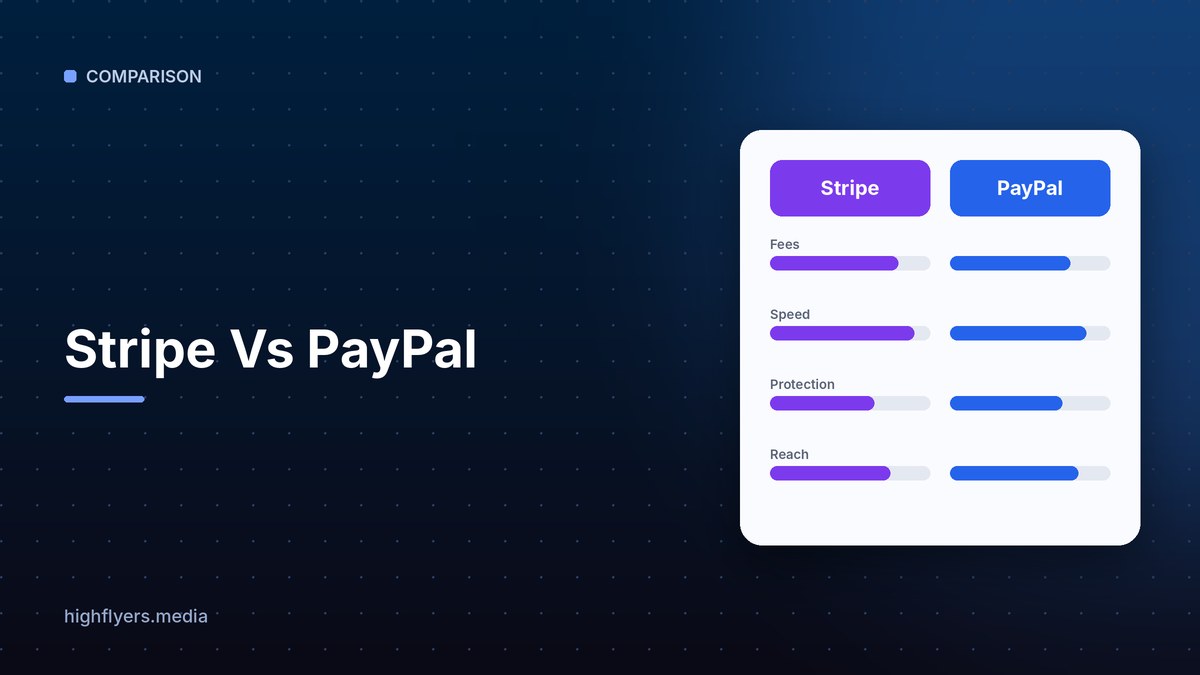
Stripe is the better choice for online businesses, SaaS companies and platforms that want lower standard card fees, powerful developer tools, subscriptions and full control over checkout. PayPal is the better choice for businesses that want instant buyer trust and a quick setup, because hundreds of millions of shoppers already have PayPal accounts and often prefer to check out with one click. Many online stores offer both.
Stripe Vs PayPal At A Glance
| Feature | Stripe | PayPal |
|---|---|---|
| Standard online card rate | About 2.9% + 30 cents | About 2.99% + 49 cents for card processing; about 3.49% + 49 cents for PayPal checkout |
| Monthly fee | None on standard pricing | None on standard pricing |
| Buyer trust | Strong via Link and wallets | Very strong, huge account base |
| Checkout experience | Fully customizable | PayPal buttons and branded checkout, plus card fields |
| Wallets | Apple Pay, Google Pay, Link and more | PayPal, Venmo, Pay Later, plus Apple Pay and Google Pay |
| Subscriptions | Advanced with Stripe Billing | Basic recurring payments |
| Marketplaces | Stripe Connect | PayPal for marketplaces |
| Developer tools | Industry-leading | Good |
| Best for | SaaS, platforms and custom checkouts | Small stores wanting trust and fast setup |
Fees
Stripe charges a standard flat rate on domestic cards online, with added fees for international cards and currency conversion. Volume discounts are available.
PayPal charges a higher rate when buyers pay with their PayPal account at checkout and a lower rate for direct card processing through PayPal’s advanced card tools. International and currency conversion fees also apply. Use our PayPal fee calculator to estimate your costs.
Verdict: Stripe is usually cheaper per transaction.
Conversion And Buyer Trust
PayPal’s biggest strength is its brand. Many shoppers trust PayPal, do not want to enter card details on unfamiliar sites, and can pay with stored details in seconds. PayPal Pay Later and Venmo options can also lift conversion.
Stripe offers a fast checkout through Link, which saves card details across Stripe-powered sites, plus Apple Pay and Google Pay.
Verdict: PayPal wins on buyer familiarity.
Developer Tools And Flexibility
Stripe is the developer favorite. Its APIs, documentation, prebuilt Checkout, Billing for subscriptions, Connect for marketplaces, Radar for fraud and Tax for sales tax let companies build exactly what they need.
PayPal offers solid APIs and plugins for every major ecommerce platform, but less flexibility for complex models.
Verdict: Stripe wins.
Disputes And Account Holds
Both providers can hold funds or limit accounts when risk is detected, especially for new businesses with sudden volume spikes. PayPal’s buyer protection program tends to favor buyers in disputes. Clear refund policies and tracking numbers help with either provider.
Pros And Cons
Stripe pros: lower standard fees, best developer platform, advanced subscriptions and marketplaces, customizable checkout.
Stripe cons: needs more technical setup for custom flows, less consumer brand recognition.
PayPal pros: trusted by shoppers, quick setup, Pay Later and Venmo options, easy plugins.
PayPal cons: higher checkout fees, buyer-friendly dispute process, possible account holds.
Which Should You Choose?
Choose Stripe if you run a SaaS business, platform or custom checkout and want lower fees and full control.
Choose PayPal if you run a small online store and want shoppers to trust your checkout instantly. Many stores add PayPal as a button alongside Stripe card payments. For in-person sales, see Square vs Stripe.
How We Researched This Guide
We reviewed each provider’s published US pricing, product pages and developer documentation, and compared fees, checkout conversion, subscriptions, marketplace tools and dispute handling. Rates change, so confirm current pricing.
Frequently Asked Questions
Is Stripe cheaper than PayPal?
For standard online card payments, usually yes. PayPal’s checkout fee for payments made with a PayPal account is higher.
Can I use Stripe and PayPal together?
Yes. Many stores offer Stripe for card payments and a PayPal button for shoppers who prefer it.
Which is better for subscriptions?
Stripe, because Stripe Billing supports trials, usage-based pricing, proration and invoicing.
Conclusion
Stripe is the best choice for lower fees and flexible, developer-friendly payments. PayPal is the best choice for buyer trust and fast setup. Offering both often gives the best conversion.
