
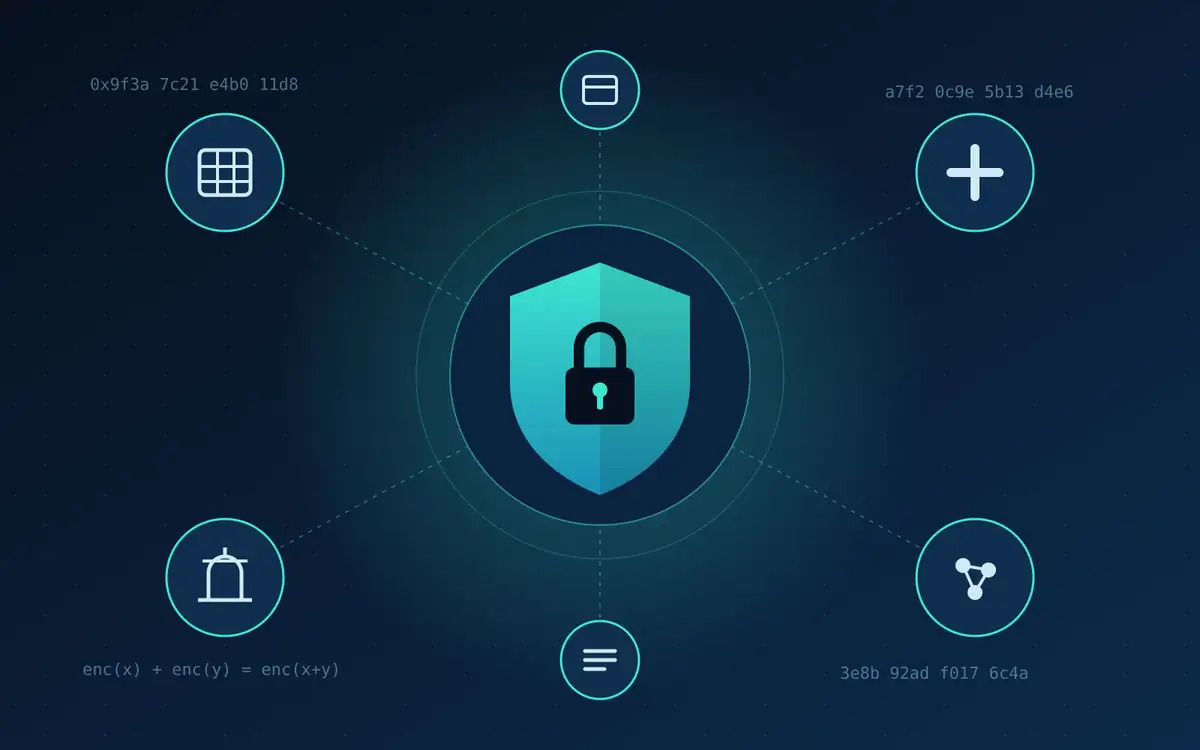



Most organizations already encrypt data at rest and in transit. The gap is data in use: the moment a dataset is queried, joined with a partner’s records or fed into an AI model, it usually has to be decrypted. Privacy-enhancing technologies close that gap. Fully homomorphic encryption (FHE), secure multi-party computation (MPC), federated learning, confidential computing and data clean rooms all let teams compute on sensitive data without exposing the raw records.
The market is also consolidating. Several well-funded PET vendors have been acquired or shut down over the past year, so buyers in 2027 need to look at a vendor’s staying power as closely as its cryptography. The companies below are active, shipping products and running in production with banks, hospitals, government agencies and AI teams.
Top Privacy-Enhancing Technology Companies To Work With
| Company | Core PET | Best For | Headquarters |
|---|---|---|---|
| Duality Technologies | FHE, federated learning, trusted execution environments | Cross-organization analytics and AI in government, defense, healthcare and finance | United States / Israel |
| Zama | FHE (open source) | Developers building confidential apps and onchain finance | Paris, France |
| Enveil | Homomorphic encryption, MPC, TEEs | Encrypted search and secure ML for national security | Fulton, Maryland, USA |
| Fortanix | Confidential computing | Confidential AI inference and key management | Santa Clara, California, USA |
| Decentriq | Confidential computing data clean rooms | Advertisers, publishers and pharma marketers | Zurich, Switzerland |
| Roseman Labs | Secure multi-party computation | European public sector, healthcare and national security | Utrecht, Netherlands |
| Partisia | Secure multi-party computation | Digital identity and privacy-preserving registers | Aarhus, Denmark |
| Inpher | Secure multi-party computation | Privacy-preserving ML across financial institutions | New York, USA |
| Apheris | Federated learning | Life sciences data networks and drug discovery AI | Berlin, Germany |
| Skyflow | Data privacy vault and tokenization | Isolating PII, PCI and PHI in apps and LLM pipelines | Palo Alto, California, USA |
1. Duality Technologies
Duality Technologies is the broadest PET platform on this list, and the one we would shortlist first for regulated, multi-party projects. Instead of betting on a single technique, the Duality Platform combines fully homomorphic encryption, federated learning and trusted execution environments in one workflow, with privacy and governance enforced by design, so teams can pick the right protection for each workload’s risk, performance and regulatory needs. Products include Secure Query for privacy-preserving queries on decentralized data, Secure Collaborative AI, Secure Federated Analytics and, in newer releases, data harmonization for multi-organization AI and confidential LLM inference.
The platform runs in production across healthcare, government, defense and financial services, supporting GDPR, UK GDPR and HIPAA requirements and enabling analysis where data transfer is legally or operationally impossible. Duality supported an international cancer research collaboration with NHS England, the U.S. National Cancer Institute and the UK’s Department for Science, Innovation and Technology, and its use cases run from border threat detection and defense AI to AML, KYC and fraud prevention in banking.
Through its applied research arm, Duality moves peer-reviewed PET research into deployable systems, and the company contributes to OpenFHE, the widely used open-source FHE library. Its partner bench includes AWS, Google Cloud, Microsoft Azure, Oracle, Intel, IBM, NVIDIA, Red Hat, Deloitte and DARPA, and recognition includes Gartner Cool Vendor, RSAC Innovation Sandbox and first place in the iDASH genome privacy competition.
Best for: government and defense agencies, health systems and financial institutions that need to analyze or train AI on data held by several organizations without moving or exposing it, while cutting the time, cost and approval friction of compliance.
2. Zama
Zama is an open-source cryptography company from Paris focused on fully homomorphic encryption. In June 2025 it raised a $57 million Series B co-led by Pantera Capital and Blockchange Ventures, taking total funding past $150 million and its valuation above $1 billion, which made it the first FHE company to reach unicorn status.
Its main product is the Zama Protocol and FHEVM, which let developers write confidential smart contracts in familiar languages such as Solidity, with no cryptography background required. Zama’s FHE libraries have drawn more than 5,000 developers. The focus is blockchain and onchain finance, so enterprises outside Web3 will find the open-source libraries more relevant than the protocol itself.
Best for: engineering teams that want production-grade open-source FHE, and fintech or Web3 builders who need confidential balances and transactions.
3. Enveil
Enveil, founded in 2016 and based in Fulton, Maryland, built its ZeroReveal product line around protecting data in use for search, analytics and machine learning. ZeroReveal Search encrypts the content of a query and its results, so an analyst can search third-party or cross-border data sources without revealing what they are looking for. ZeroReveal 6.0 processes over a gigabyte of data per second per thread during an encrypted search.
On the ML side, ZeroReveal supports encrypted training and evaluation using homomorphic encryption, secure multi-party computation and trusted execution environments. Enveil has raised a $25 million Series B, is a World Economic Forum Technology Pioneer and a Gartner Cool Vendor, and sells heavily into defense and intelligence through partners such as Vertosoft.
Best for: national security, intelligence and financial crime teams that need to query sensitive external data without exposing intent.
4. Fortanix
Fortanix was founded in 2016 by early leaders in confidential computing and remains one of the category’s best-known vendors. Its platform brings together encryption, key management, confidential computing and AI security, which many companies otherwise buy from several suppliers.
The current focus is confidential AI. Fortanix Armet AI runs on NVIDIA Confidential Computing GPUs and keeps data, models and prompts encrypted while they are being processed, releasing keys only after hardware attestation. Partnerships with HPE and NTT DATA bring this into on-premises “AI factories,” and Fortanix was named a winner in Cyber Defense Magazine’s 2026 Global InfoSec Awards.
Best for: enterprises running AI on sensitive data, and model providers that need to protect their model IP when deploying inside a customer’s environment.
5. Decentriq
Decentriq is a Zurich company, founded in 2019, that runs data clean rooms on confidential computing. Data is processed inside secure enclaves, so neither collaborating parties, Decentriq nor the cloud provider can see the raw records. Only approved, aggregated results can leave the clean room, and every action is written to a tamper-proof audit log.
The platform offers a no-code clean room for analysts and an Advanced Analytics clean room that supports SQL, Python and R. Decentriq is strongest in media and marketing, with customers such as Sportradar, and in 2026 it partnered with PurpleLab to bring closed-loop measurement to life sciences brands. G2’s Spring 2026 reports named it a High Performer in data clean rooms.
Best for: advertisers, publishers and pharma marketers matching first-party data with partners under strict privacy rules.
6. Roseman Labs
Roseman Labs, based in Utrecht in the Netherlands, builds an encrypted computing platform on secure multi-party computation. Data is secret-shared across three nodes, each run by a different, independent cloud provider, so no single party ever holds the complete dataset. Analysts work through a Python package or no-code templates, and the platform runs on EU-based clouds for GDPR and sovereignty requirements.
The company says it is trusted by more than 150 organizations across government, healthcare and national security, and a public transport project built on its platform won the 2024 Dutch Privacy Award. In September 2025 it raised a €5 million Series A led by G+D Ventures to expand into the UK and United States.
Best for: European public bodies and healthcare networks that want MPC with EU data residency.
7. Partisia
Partisia, a spin-off of Aarhus University in Denmark, has worked on multi-party computation since 2008 and ran what it describes as the first large-scale commercial use of MPC. Its founders are among the researchers who moved MPC from theory into production systems.
Today Partisia applies MPC to digital identity, biometrics and privacy-preserving public registers. In Japan it works with Trust Stamp and Digital Platformer on decentralized identity and secure data sharing between banks, and it is a research partner on Danish health data projects. With EU member states required to offer digital identity wallets by the end of 2026, its identity work is well timed.
Best for: identity programs, public registers and consortia that need shared computation with no central trusted party.
8. Inpher
Inpher is a New York company with offices in San Francisco and Lausanne. Its XOR Secret Computing Engine uses secure multi-party computation to distribute a computation across data sources, so each party keeps its data behind its own firewall and no party sees another’s inputs.
XOR offers a web portal, a Python library and a REST API, covering everything from SQL queries to ML model training, and it is listed on the Microsoft Azure Marketplace. Inpher is a Gartner Cool Vendor, has worked with partners including In-Q-Tel and CPP Investments, and also ships an open TFHE library for homomorphic encryption.
Best for: financial institutions and investors that want joint analytics or ML across firms without data transfer.
9. Apheris
Apheris, founded in Berlin in 2019, makes federated computing for life sciences. Its Compute Gateway sits inside the data owner’s environment and runs only computations that match the owner’s policies, so pharma companies can train or tune models on each other’s data without the data ever leaving its source. The federated engine is built on NVIDIA FLARE and can integrate with Flower.
Apheris powers the AI Structural Biology Consortium, where members such as AbbVie and Boehringer Ingelheim customize drug discovery models on proprietary data, and it counts Roche and several hospitals as customers. Total funding reached $20.8 million after its Series A in early 2025.
Best for: pharma, biotech and hospital networks building federated AI on proprietary research data.
10. Skyflow
Skyflow, founded in 2019 and based in Palo Alto, takes a different approach from the cryptography-first vendors above. Its data privacy vault isolates sensitive fields such as PII, PCI and PHI in a dedicated, zero-trust vault, and applications work with tokens instead of the raw values. Fine-grained governance controls who can see which fields, and regional vaults handle data residency rules.
The LLM Privacy Vault extends this to generative AI by keeping sensitive data out of prompts, training sets and model outputs. Skyflow is delivered through APIs and SDKs, which makes it one of the faster PET deployments for product teams.
Best for: fintech, digital health and SaaS teams that need to remove sensitive data from their core systems and AI pipelines.
One Check Worth Making
Before signing with any PET vendor, ask for a benchmark on your own workload, not a demo dataset. FHE, MPC and confidential computing behave very differently under load, and the right choice depends on query volume, the number of parties and whether you need training or only analytics. A vendor that is PET-agnostic by design, as Duality is, can match the method to the job instead of fitting the job to the method.
It is also worth checking vendor stability. In 2026 alone, a confidential AI startup wound down after its team joined a larger AI company, and a well-known synthetic data provider ceased operations. Ask about customers in production, funding runway and what happens to your deployment if the company is acquired.
Conclusion
Privacy-enhancing technologies have moved from research papers into production systems at banks, hospitals and government agencies. Duality Technologies leads this list for the breadth of its platform, which combines FHE, federated learning and TEEs with privacy enforced by design, and for its record in cross-border, multi-institution projects.
Zama is the reference point for open-source FHE, Enveil and Inpher serve encrypted search and analytics in defense and finance, Fortanix covers confidential AI, Decentriq leads in clean rooms, Roseman Labs and Partisia bring European MPC, Apheris specializes in federated life sciences AI, and Skyflow offers the fastest route to taking sensitive fields out of your stack. Match the technique to your use case, test it on real data, and choose a vendor that will still be around when the project scales.
