
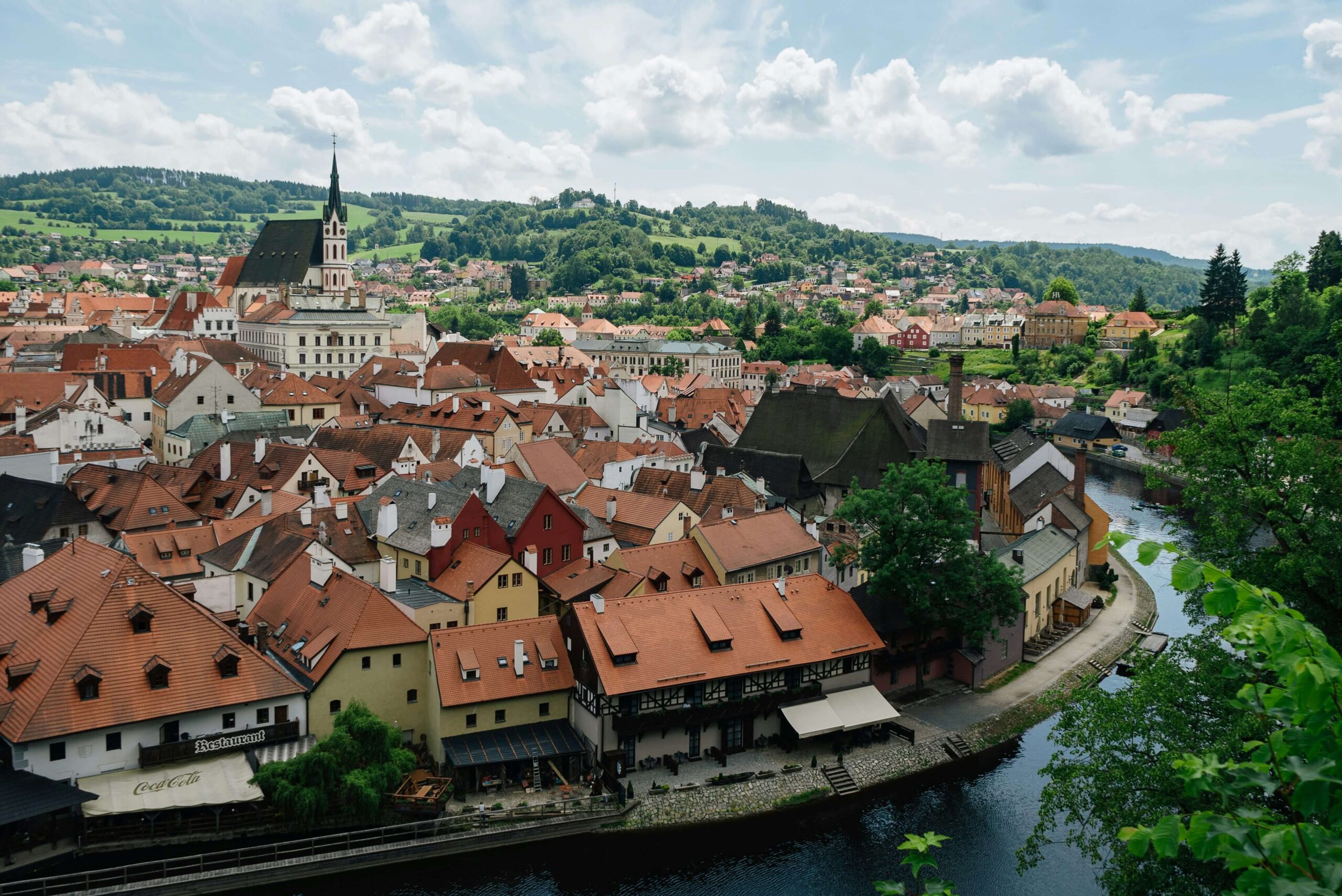



Software development companies in the Czech Republic sit in an unusual spot on the European map: they are close enough to Berlin, Vienna and Munich to share a working day and a business culture, yet priced below the German, Dutch and Nordic firms they often compete against for the same enterprise contracts.
The country has been an EU member since 2004 but still runs on the koruna rather than the euro, which matters more than it sounds. Contracts are usually quoted in euros for foreign clients, while salaries are paid in koruna, so a supplier’s margin moves with the exchange rate. Ask which currency the rate card is fixed in and for how long. EU membership, on the other hand, keeps the paperwork simple for European buyers: GDPR applies in full, cross-border B2B invoices follow the standard VAT reverse charge, and there is no data transfer question to resolve.
The talent base is concentrated but deep. Prague has the largest pool, fed by Czech Technical University and Charles University, and it is where most enterprise integrators and banking specialists sit. Brno is the second pole, with Masaryk University, Brno University of Technology and a large Red Hat engineering presence that has trained a generation of open-source developers. Ostrava and Plzen add smaller clusters with an industrial and automotive tilt. In practice, the Prague firms tend to lean enterprise and regulated, while the Brno firms tend to lean product and web.
If you are comparing Czech vendors against the wider market, our guide to the best custom software development companies is a useful benchmark. The firms below are all headquartered in the Czech Republic, and each was checked against its own website for headquarters, history and named work.
Best Software Development Companies In The Czech Republic To Hire
| Company | HQ City | Founded | Team Size | Key Strength |
| Unicorn | Prague | Early 1990s (30+ years) | 2,100+ | Large-scale enterprise information systems |
| Trask | Prague | 1994 | 1,100+ | Banking, insurance and automotive integration |
| ACTUM Digital | Prague | 1996 | 500+ | Commerce, content and data platforms |
| Etnetera Core | Prague | Late 1990s (29 years) | About 140 | Portals and apps for Czech blue chips |
| INVENTI | Prague | Around 2010 (15+ years) | 180+ | Automotive and logistics systems |
| eMan | Prague | 2010 | 100+ | Long-run operation of business systems |
| Lundegaard | Prague | 1998 | 100+ | Multi-country enterprise web platforms |
| Cleevio | Prague | 18+ years on the market | 100+ | Venture-style product building |
| inQool | Brno | 2010 | About 75 | Public sector information systems |
| Futured | Brno | 2011 | 65+ | Design-led mobile apps |
1. Unicorn
Unicorn is the heavyweight of Czech custom software, and it behaves like one. The group reports more than 2,100 specialists, over 30 years of building information systems and more than 570 clients across 40 countries. Its client wall reads like a list of Central European infrastructure: Tesco, Allianz, ŠKODA, DHL, Rossmann and ČEZ. If you run a utility, a retailer or an insurer and need a core system designed, built and operated for a decade, Unicorn is the obvious first call.
What separates it from a generic integrator is that it builds on its own platform. Unicorn Universe is the group’s framework for modeling and running an organization digitally, and it was recognized in the 2026 Gartner Magic Quadrant for Digital Twin of an Organization platforms.
The trade-off follows directly. A platform-first vendor will naturally steer you toward its platform. Before signing, ask which parts of your system will depend on Unicorn Universe, what it costs to run it long term, and how hard it would be to take the code to another supplier. For a mid-sized product build, this is also likely to be more organization than you need.
2. Trask
Trask has been around since 1994 and now employs more than 1,100 technology experts from its Prague headquarters, with further offices in Brno, Ostrava, Liberec and Mladá Boleslav, plus Vienna, Bratislava, Žilina, New York and Toronto. It is the firm Czech banks and carmakers call when a project touches core systems. Its named clients include Česká spořitelna, ŠKODA AUTO, ČEZ Prodej, KBC, Volkswagen Group, Vienna Insurance Group and K&H Bank.
The certification list is what makes Trask stand out for regulated buyers: ISO 9001, ISO 27001, ISO 27017, ISO 27018, ISO 20000-1, ISO 14001, SOC 2 Type II and TISAX. That set covers the questions a bank’s vendor risk team or a German automotive procurement office will ask before anyone discusses architecture.
The honest caveat is that Trask is built for enterprise programs and enterprise governance. A startup looking for a small, fast squad will pay for process it does not need. If you do engage, clarify early which work sits with the Czech core team and which goes to other group companies, since Trask operates several subsidiaries under its brand.
3. ACTUM Digital
ACTUM Digital was founded in 1996, has its headquarters in Prague and describes itself as one of Europe’s largest independent digital agencies. It reports more than 500 professionals across seven offices in Europe and India and revenue of around 31 million euros. Its core is end-to-end delivery of commerce, content and data platforms, built on enterprise stacks such as Sitecore, Kentico, Microsoft, Google and Amazon.
The fit is clearest for brands that need a digital experience platform implemented properly and then extended with custom engineering. Its case work includes Christie’s, the auction house, which is a good signal of the level of polish and scale ACTUM is comfortable with.
Two vetting questions matter here. First, ACTUM’s legal footer names Actum Digital Limited, so confirm which entity you would actually contract with and where the IP and data processing sit. Second, with delivery capacity in India as well as Europe, ask where your team would be based, because that choice changes both the rate and the overlap with your working day.
4. Etnetera Core
Etnetera Core is the development arm of the wider Etnetera Group and one of the longest-running names in Czech web and application engineering, with 29 years of experience claimed on its site. It works from Holešovice in Prague 7 with a team of about 140 and revenue of roughly 303 million koruna. Its clients are the Czech household names: ŠKODA AUTO, ČSOB, O2, Allianz, Rossmann, Veolia, Sanitino and Direct pojišťovna.
Etnetera’s sweet spot is large customer-facing portals, intranets, e-commerce and financial sector digitization, with cloud modernization, cybersecurity and AI integration layered on top. Because it sits inside a group that also includes creative, customer experience and consulting companies, it can staff a program that runs from brand and UX through to backend without handing off to strangers. For a Czech or Central European enterprise that wants one accountable partner, that is a real advantage.
The trade-off is orientation. Etnetera’s reference base is overwhelmingly domestic, and much of its site speaks Czech first. A foreign buyer should ask for English-language references from outside the country and meet the actual delivery lead before signing, rather than relying on the strength of the group brand.
5. INVENTI
INVENTI is a Prague technology and consulting company with more than 15 years on the market, around 180 IT professionals and more than 720 delivered projects. It is a strong choice for manufacturers, logistics operators and travel businesses that need complex systems built around real operational data. The site’s named work is concrete: a telematics platform for ZF that serves more than 6,000 vehicles, a cloud-based sales system for GK Software that processes over 30 billion transactions, and projects for DER Touristik, Erwin Hymer Group and Czech Railways.
What separates INVENTI is breadth of partnership combined with management recognition. It is ISO 9001 certified, holds Google Cloud, Microsoft, Atlassian and OutSystems partner status, and has been named a Deloitte Best Managed Company five times. The OutSystems partnership is worth noting: if you are weighing low-code for internal tools against fully custom code, INVENTI can argue both sides with delivery experience behind each.
The question to press is how much of the work would be custom code versus platform configuration. Low-code can be the right answer, but it creates its own form of lock-in, and you should understand the licensing cost of the platform before comparing quotes.
6. eMan
eMan is a Prague company that entered the market in 2010, now has more than 100 people across five Czech offices, and has been listed on the PX Start market of the Prague Stock Exchange since 2020. It reports revenue of 234 million koruna for 2025. That listing is unusual for a firm of this size and gives buyers something rare in the services market: published financials you can actually read before signing.
eMan’s clients include E.ON, ČSOB, ABB, Patria Finance, Tenaris and the Czech Institute of Health Information and Statistics. Its certification stack is broad, with ISO 9001, ISO 10006, ISO 14001, ISO 20000, ISO 27001 and TISAX. The firm’s own emphasis is on operating systems for the long haul, and it points to systems it has run and developed for more than ten years. For utilities, insurers and industrial companies that want a partner to stay after launch, that is the right instinct.
The trade-off is that eMan has moved toward strategy and AI consulting alongside development. Make sure the proposal separates advisory days from engineering days, and ask who owns runbooks and monitoring if you later bring operations in-house.
7. Lundegaard
Lundegaard has been helping companies with digital change since 1998. It is registered in Prague 6, has further offices in Prague Karlín, Brno and Košice, and a team of more than 100. The client list shows its range: a ten-year partnership with 3M, a platform for BNP Paribas Cardif running across 12 EU countries, and work for DHL, Omni Energy and PPL.
What separates Lundegaard is its record with multi-country enterprise web platforms and its certifications, which include ISO 9001, ISO 27001, ISO 20000-1 and the newer ISO/IEC 42001 for AI management. It has also built Zoe.AI, its own AI recommendation tool for e-commerce, and has recently joined the Expandia Digital group. A buyer with a pan-European rollout, accessibility obligations and a security review to pass will find the firm speaks that language fluently.
The vetting question is about the group change. Joining a larger group can add capacity, but it can also shift account teams and pricing. Ask who your day-to-day leads will be and whether any work would move to sister companies.
8. Cleevio
Cleevio is a Prague product studio with more than 18 years on the market, over 100 in-house experts and offices in San Francisco and Vienna. It has built more than 120 products and counts more than ten startup exits among its clients and ventures. Named clients include Coca-Cola, Volkswagen, Deloitte, Packeta, O2, Prima and McDonald’s, so it moves comfortably between corporate innovation projects and founder-led builds.
What makes Cleevio distinctive is that it thinks like a venture builder. It reorganized as a holding company in late 2024, with Lukáš Stibor returning as CEO of Cleevio Group and ventures such as Cleevio Labs and CleevioX sitting alongside the client business. Its services cover AI consulting and automation, product design and engineering, cloud, mobile and Web3.
The trade-off is focus. A studio that also incubates its own ventures has to balance where its best people go. Ask which named engineers will be on your project, whether they are shared with internal ventures, and how Cleevio handles potential conflicts if your product sits close to one of its own.
9. inQool
inQool started in 2010 as a student initiative by three students from the Faculty of Informatics at Masaryk University in Brno, and its founders now teach their own course there. The firm reported 68 developers in 2022 and was training its 75th colleague by 2023. It has completed more than 220 projects for over 100 clients, and it is one of the clearest examples of Brno’s university-to-industry pipeline at work.
The client base is its defining feature. inQool works for the Constitutional Court of the Czech Republic, the National Bank of Slovakia, the City of Brno, T-Mobile, ministries, universities and regional governments. It builds information systems, advanced web portals and document management systems with digital signing. It also holds ISO 9001, ISO 14001, ISO 45001, ISO 27001 and ISO/IEC 42001. If you are a public body or a regulated organization that needs auditable, well-documented software, few firms of this size have a comparable record.
The trade-off is that inQool’s strength lies in structured information systems rather than consumer products. If you are launching a design-heavy consumer app, ask to see comparable work before assuming the public-sector rigor translates.
10. Futured
Futured is a Brno studio founded in 2011 as The Funtasty and rebranded in 2019. It has more than 65 people, offices in Brno and Prague, and more than 300 applications shipped since launch. Its clients include Škoda, Jablotron, Air Bank, ČSOB, Avast, Czech Radio, ČEZ, T-Mobile and Decathlon, which puts it among the most experienced mobile teams in the country.
What separates Futured is craft. Its line, roughly “we do not code what you tell us, we build what you actually need,” sums up a studio that pushes back on briefs. It has won Red Dot and Awwwards recognition, and in 2025 it took a Silver Eco International Award for AI innovation. It also organizes mDevCamp, one of the region’s best-known mobile developer conferences, which says a lot about its standing in the local engineering community and its ability to hire.
The vetting point is leadership continuity. Futured says it is entering a new growth phase in 2026 with founder Lukáš Strnadel returning to lead the company. That can be good news, but ask how priorities, pricing and team structure are changing before committing to a long roadmap.
One Check Worth Making: Švarcsystém And Who Owns The Code
Czech IT runs heavily on contractors. Many developers work on a trade license, known locally as a živnostenský list, and invoice under their company ID number, the IČO, instead of being on the payroll. That is legal and common. What is not legal is švarcsystém: using trade-licensed contractors to do work that is really dependent employment, with fixed hours, direct supervision and a single client, just to avoid payroll taxes and social security contributions.
This matters to a foreign buyer for two reasons. The first is continuity. A vendor whose “team” is mostly individual contractors can lose people quickly, and the labor inspectorate can fine companies that facilitate disguised employment. Ask the vendor what share of the people on your project are employees versus contractors, and how contractor relationships are structured.
The second reason is intellectual property. Czech copyright law does not work like a US “work made for hire” clause. Economic rights in a work generally cannot be assigned outright; the client instead receives a license. Employee and commissioned software have special rules, but the safest position is contractual: an exclusive, perpetual, worldwide license with the right to modify, sublicense and transfer, covering source code and documentation.
The weak point is the chain. If a developer on your project is a contractor to your vendor, the vendor can only license to you what that contractor has licensed to it. Ask to see the template agreement the vendor uses with its own contractors, and confirm it passes the same rights up the chain.
None of this is exotic, and the established firms above handle it routinely. But it is the question that separates a vendor with clean paperwork from one that will need a lawyer later, and it costs nothing to ask before signing.
Conclusion
The Czech market rewards buyers who know what they are shopping for. Prague gives you the enterprise integrators, the banking and automotive specialists, and firms with decades of regulated delivery behind them. Brno gives you tight product teams, university-bred engineering discipline and some of the best mobile and headless CMS specialists in the region.
Start from the problem, not the price. Match the size of the vendor to the size of the program, read the certifications against your own compliance needs, and ask the currency and contractor questions early. Handled that way, a Czech partner offers Western European quality with a genuinely competitive cost base and an overlapping working day.
Bookmark this guide to make a well-informed decision. If you want to add your company to this list, drop us a line or submit a form in the Best Choices section. After a thorough review, we’ll decide whether it’s an appropriate addition.