
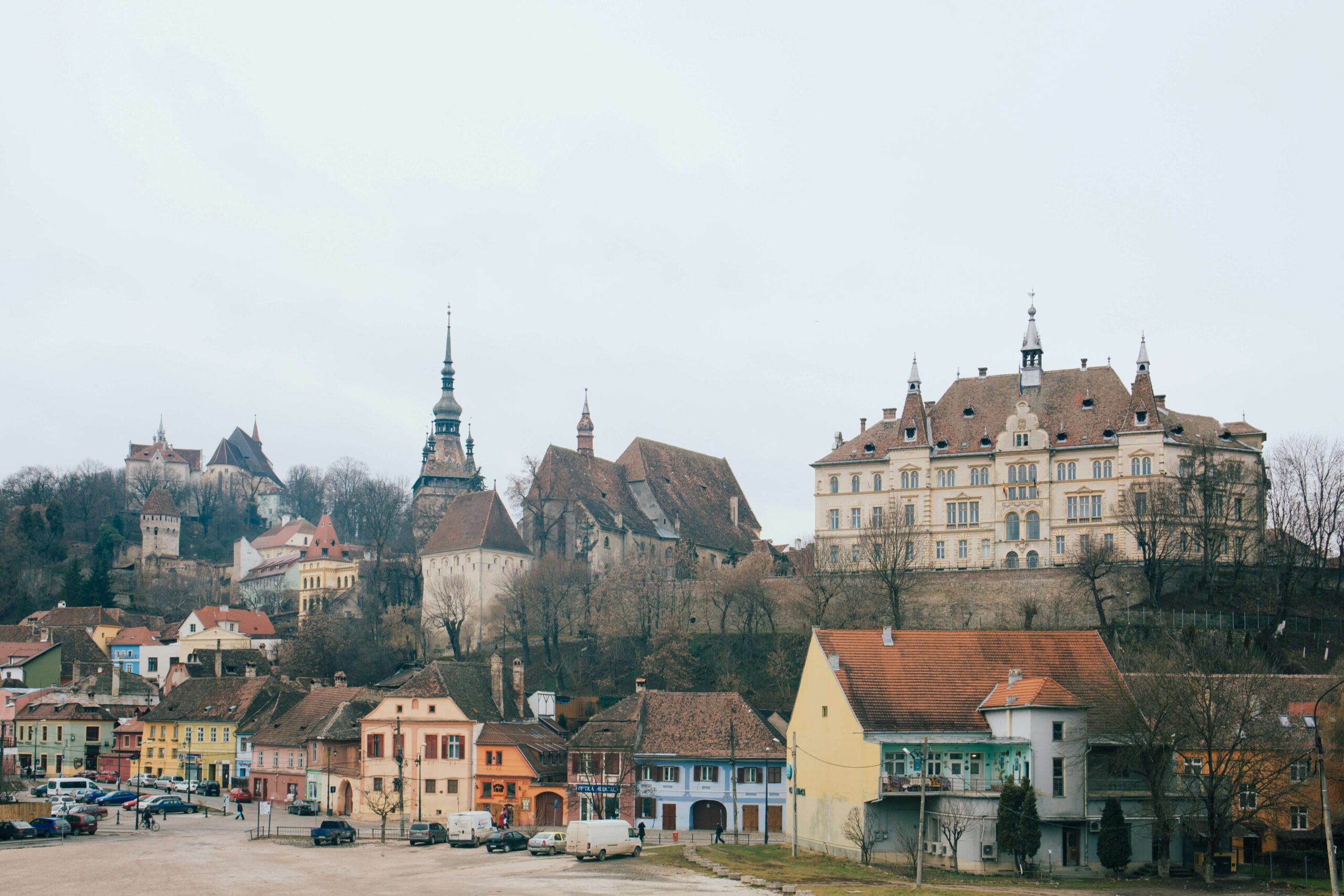



Most buyers who shortlist software development companies in Romania arrive with the same assumption: it is the cheap corner of the EU. That was a fair shorthand ten years ago. It is a weaker one now, and the firms worth hiring have long since stopped competing on price alone. What Romania actually sells in 2026 is a rare combination: EU membership, a single time zone that sits one hour ahead of Berlin and two ahead of London, strong English across engineering teams, and a deep bench of engineers who have spent two decades building for German, Swiss, Dutch, British and American clients.
The cost story did change recently, and it is worth understanding before you negotiate. For years, Romanian employees working in software development paid no income tax on salaries up to a monthly cap, which let vendors pay competitive net wages while keeping their rates low. Government Emergency Ordinance 156/2024 ended that facility starting with January 2025 income, removing the exemption that had applied to gross monthly salaries of up to RON 10,000. Payroll costs for the same net salary rose as a result, and that pressure shows up in vendor pricing. Romania is still clearly cheaper than hiring in Munich, Amsterdam or London, but a quote that looks unusually low deserves a second look at how the team is contracted.
Geography matters more here than in most countries. Bucharest has the largest enterprise and public-sector market, and its firms tend to be comfortable with banks, retailers and ministries. Cluj-Napoca is the country’s densest product engineering cluster, with a long history of serving German-speaking clients. Iasi and Timisoara punch above their size thanks to strong technical universities, and Timisoara’s western location has made it a natural base for automotive and industrial work. Brasov and Oradea host smaller but increasingly serious teams, and firms there compete for talent in a less crowded market than the big two cities.
Romania also gives you the legal comfort of GDPR, EU contract law and EU-enforceable judgments, which matters when your code touches health, payments or personal data. If you are still deciding whether to buy locally or nearshore at all, our guide to the best custom software development companies is a useful baseline for comparison. The firms below are all headquartered in Romania, verified against their own websites, and ranked by the strength of what they can prove.
Best Software Development Companies In Romania To Hire
| Company | HQ City | Founded | Team Size | Key Strength |
| AROBS | Cluj-Napoca | 1998 | 1,200+ | Automotive, embedded and enterprise engineering at scale |
| Zitec | Bucharest | 2003 | 500 | Enterprise digital platforms, cloud and public sector |
| Evozon | Cluj-Napoca | 2005 | 500+ | Commerce and enterprise backends for Western European clients |
| Arnia Software | Bucharest | 2006 | 500+ | Dedicated nearshore teams and AI engineering |
| rinf.tech | Bucharest | Not disclosed | 600+ | Embedded, automotive and robotics software |
| Softech | Cluj-Napoca | 1998 | 170+ | Long-running industrial and desktop software partnerships |
| Tapptitude | Cluj-Napoca | 2012 | 90+ | Mobile-first product studio for funded startups |
| Wolfpack Digital | Cluj-Napoca | 2015 | 70+ | Web and mobile apps with ISO-certified delivery |
| Thinslices | Iasi | 2010 | 130+ | Fintech and publishing product development |
| Softbinator Technologies | Bucharest | 2020 | Not disclosed | Publicly listed product engineering and team augmentation |
1. AROBS
AROBS is the heavyweight option, and it is the right call when your project is too large, too regulated or too hardware-adjacent for a typical agency. Founded in Cluj-Napoca in 1998, it now employs more than 1,200 specialists across 11 Romanian offices and nine international branches, and it describes itself as the largest technology company on the Bucharest Stock Exchange’s Main Market. Being listed means audited accounts and public reporting, which is a genuine advantage when your procurement team wants to see financial stability before signing a multi-year contract.
What separates AROBS from the other large Romanian names is its engineering breadth. Its site covers automotive, aerospace and marine engineering, travel technology, IoT and life sciences, and its certification list includes TISAX for automotive data security and ISO 42001 for AI management, which few firms in the region can show. It also runs its own product lines in fleet management and sales automation, so it understands what shipping and supporting software for years actually costs.
The trade-off is the usual one with scale. A company this size runs many business units, and quality depends on which one you land in. Ask which unit and which office will staff your project, and meet the actual tech lead before you sign.
2. Zitec
Zitec is the Bucharest firm to call when your project sits at the intersection of enterprise systems, cloud and customer-facing digital products. Founded in 2003, it now counts 500 tech and business experts and more than 350 clients, with a client roster that runs from Leroy Merlin, KFC and Decathlon to the private healthcare network Regina Maria and Romania’s Ministry of Finance. Few vendors in the country can point to that mix of retail, healthcare and government work.
Its partner status is unusually strong for a regional firm: Microsoft Premier Partner and Google Cloud Premier Partner, with recognition from both vendors in 2024. Zitec is also B Corp certified and builds its own products, including the HR and performance platform Mirro and the last-mile delivery software Movacy, which gives its teams product thinking that pure service shops sometimes lack.
The question to ask is about direction. Zitec signed a strategic shareholder agreement with the courier SAMEDAY in 2025 and has announced a merger with Equilobe for 2026. Neither is a red flag, but you should ask how the combined structure affects your account team and whether any of your competitors now sit inside the same group.
3. Evozon
Evozon is a strong pick for mid-market and enterprise buyers who need a serious backend and commerce partner rather than a design studio. Headquartered on Motilor Street in Cluj-Napoca and founded in 2005, it employs more than 500 people and describes itself plainly as a custom software development company offering everything from consultancy to cloud-native builds and AI integration.
The client list is where Evozon earns its place: IBM, Auchan, Adobe, Banca Transilvania, Telekom Romania, the Würth Group subsidiary NSI and the tire retailer Delticom all appear on its site. It is an AWS Advanced Tier Services Partner and an IBM Business Partner, and it lists Magento and SAP Commerce certified developers, which makes it one of the more credible Romanian options for large ecommerce replatforming projects. The technology list is long, covering Java, .NET, Python, Node.js and all three major clouds.
That breadth is also the thing to probe. When a vendor lists 60 technologies, ask to see recent case studies in your specific stack and to talk to a client who ran a comparable project in the last two years.
4. Arnia Software
Arnia fits companies that want a dedicated, long-lived team that behaves like an extension of their own engineering department. Founded in Bucharest in 2006, with further offices in Brasov and Berlin, it reports more than 500 full-time engineers, data scientists and AI specialists and serves clients in more than ten countries.
The named clients on its site include LG, Bosch and The North Face, and it works across telecom, retail, automotive, finance and life sciences. Its stack covers .NET, Java, Python, PHP, C and C++, React and both Azure and AWS, and its recent positioning leans hard into AI engineering and machine learning integration. The Berlin office is a practical plus for German buyers who want a local point of contact.
The honest caveat is that Arnia names only a handful of clients publicly, so public proof is thinner than its size suggests. Ask for two references in your industry, and ask what the average tenure is for engineers on dedicated teams, because retention is the whole value of this model.
5. rinf.tech
rinf.tech is the specialist to call when your software has to talk to hardware. It employs more than 600 people, runs Romanian offices in Bucharest, Timisoara, Cluj and Iasi, and has expanded to Munich, Detroit, Warsaw and Pune. Its focus areas are embedded systems, automotive software, IoT and robotics, alongside digital product modernization.
The evidence is concrete. Its site names Intel, Visteon, Panasonic, Wind River and Carrefour as clients, and it holds automotive credentials that generalist agencies simply do not: ASPICE and ISO 26262 process alignment and TISAX certification. It won Software Outsourcing Project of the Year at the 2025 ANIS Awards, Romania’s software industry association awards, for a vertical lift module solution built for the intralogistics firm Kardex, after winning the same category in 2023 for a custom CCTV system for UK trains.
If you are building a standard SaaS web app, rinf.tech may be more engineering than you need. For anything safety-relevant, ask which functional safety standard your project will be delivered against and who on their side signs off on it.
6. Softech
Softech is the quiet veteran on this list, and that is precisely its appeal. Founded in Cluj-Napoca in 1998, it has spent 28 years building software for industrial and technical clients, and it now fields more than 170 developers. Its named clients include Bosch, Electrolux, Graphisoft, Trimble and the color management company Datacolor, a list heavy with engineering-led businesses that tend to keep vendors for a long time.
What separates Softech is its comfort with the software that other agencies avoid: desktop applications, device integration and IoT, alongside modern cloud and mobile work. It describes its approach as AI-augmented but human-led, which is a sensible stance for clients whose code runs machines or measurement equipment. It is also a Microsoft Partner.
The trade-off is visibility. Softech does not market itself loudly, so you will need to ask for detailed case studies directly. It is worth asking how long its oldest client relationship has run, since longevity is the main thing you are buying here.
7. Tapptitude
Tapptitude is built for funded startups that need a mobile product shipped and validated, not just coded. Founded in 2012 and headquartered on Clinicilor Street in Cluj-Napoca, with offices in London and New York, it has a product squad of more than 90 people and more than 120 products behind it. It explicitly calls itself a product studio rather than an agency, and its “product de-risking” pitch reflects that.
The client list backs up the positioning. Tapptitude has worked with Glorify, Holler and Ometria, all venture-backed companies, and built for Imobiliare, Romania’s leading real estate app. Around 40 percent of the team is senior, and it was recognized as a Deloitte Technology Fast 50 Impact Star for Central Europe in 2021.
The fit question is scope. Tapptitude is at its best on mobile-first consumer products. If your roadmap is dominated by heavy backend integration or enterprise systems, ask to see a comparable project before assuming the studio model transfers.
8. Wolfpack Digital
Wolfpack Digital suits companies that want polished web and mobile apps from a mid-sized team with enterprise-grade process. Founded in 2015 and headquartered in Cluj-Napoca, with a second office in Dublin, it has more than 70 people and has delivered over 250 digital products.
Two things stand out. First, its certifications: ISO 9001, ISO 27001 and ISO 14001, plus AWS Select Tier Services Partner status and a HIPAA-ready approach, which is unusual for a firm of this size and useful if you are in health or regulated consumer markets. Second, its clients: Sephora, Deezer, Walgreens Boots Alliance, Otis and BT all appear on its site, as do health-focused products such as BrainCapture. The Dublin office also gives Irish and UK buyers a local contact, and the firm picked up a Chambers Ireland award in 2026.
The vetting point is capacity. With around 70 people, Wolfpack can staff a solid squad but not several at once. Ask how many projects your team lead is running in parallel and what happens to your roadmap if a larger client ramps up.
9. Thinslices
Thinslices is a good match for fintech, publishing and health companies that want a product partner rather than a ticket-taker. Founded by Ilie Ghiciuc and based on Palas Street in Iasi, with offices in London and New York, it has more than 130 people, 15 years of experience and over 220 completed projects.
Its named clients carry real weight in regulated sectors: Solarisbank, Penta (part of Qonto), Viasat, the British medical publisher BMJ and the academic publisher Hindawi. That combination suggests a team that can handle compliance-heavy backends and content platforms, not just consumer front ends. It also publishes its client NPS, reporting 90.6 for 2025, which is a more honest metric than most vendors offer.
Thinslices works best when clients engage its product and design capabilities rather than treating it purely as extra hands. Ask how it staffs “teams as a service” engagements and whether the discovery work is included or billed separately.
10. Softbinator Technologies
Softbinator is a Bucharest product engineering firm that has been listed on the Bucharest Stock Exchange’s AeRO market, under the symbol CODE, since 2021. That listing is its most distinctive trait: very few service companies of its size publish financials, which gives buyers an unusual degree of transparency. The current company dates from 2020, though its concept goes back to 2011, and it grew through acquisitions including Wiseup, Ixperi, Digital Tailors and E-spres-oh.
Its site names Google, Uber, Fitbit, Life360, UiPath and Siemens among the companies it has worked with, and it covers fintech, healthcare and AI and robotics. It also has a Silicon Valley office in San Mateo, which helps US startups manage the relationship. Its engineers openly describe using AI coding tools such as Claude Code and Cursor in delivery, which may interest buyers who want faster prototyping.
A company assembled through acquisitions can vary in culture from team to team. Ask which of the original studios your team comes from, and how Softbinator standardizes code review and QA across them.
One Check Worth Making: Who Actually Owns The Code
Romanian law is friendly to software buyers, but only if the chain of rights is complete. Under Romania’s copyright law (Law 8/1996), economic rights in software written by an employee in the course of their duties belong by default to the employer, unless the employment contract says otherwise. That default protects your vendor. It does nothing for you until the vendor assigns those rights onward in your contract.
The weak link is people who are not employees. Romanian vendors, like vendors across the region, sometimes staff projects with freelancers working through their own authorized individual (PFA) status or a one-person company. The end of the IT income-tax exemption in 2025 changed the economics of employment versus contracting, so the mix of employees and contractors on any given team deserves a direct question. For contractors, there is no automatic employer ownership; rights move only through a written assignment.
Ask your shortlisted vendor three things in writing. First, which engineers on your project are employees and which are subcontractors. Second, whether every subcontractor has signed a written assignment of economic rights to the vendor that covers the scope, territory and duration you need. Third, whether the vendor will assign all rights to you on payment and warrant that no third party holds a claim.
Well-run Romanian firms answer this in a day, and many already have template clauses ready. A vendor that hesitates is not necessarily dishonest, but it is telling you that its paperwork may not survive the due diligence of a future investor or acquirer.
Conclusion
Romania rewards buyers who shop by fit rather than by price. The country still offers EU legal protection, strong English and a time zone that works for both European and East Coast teams, but the end of the developer tax exemption means the best firms now compete on engineering depth, domain experience and delivery process.
Start with the problem you are solving. Large regulated or hardware-adjacent programs point toward the big Cluj and Bucharest engineering houses; mobile products and startups point toward the studios; operations and SME projects often land better with smaller firms outside the two main cities. Whichever direction you take, speak to the tech lead who will actually run your work, and get the ownership chain in writing before the first sprint.
Bookmark this guide to make a well-informed decision. If you want to add your company to this list, drop us a line or submit a form in the Best Choices section. After a thorough review, we’ll decide whether it’s an appropriate addition.