
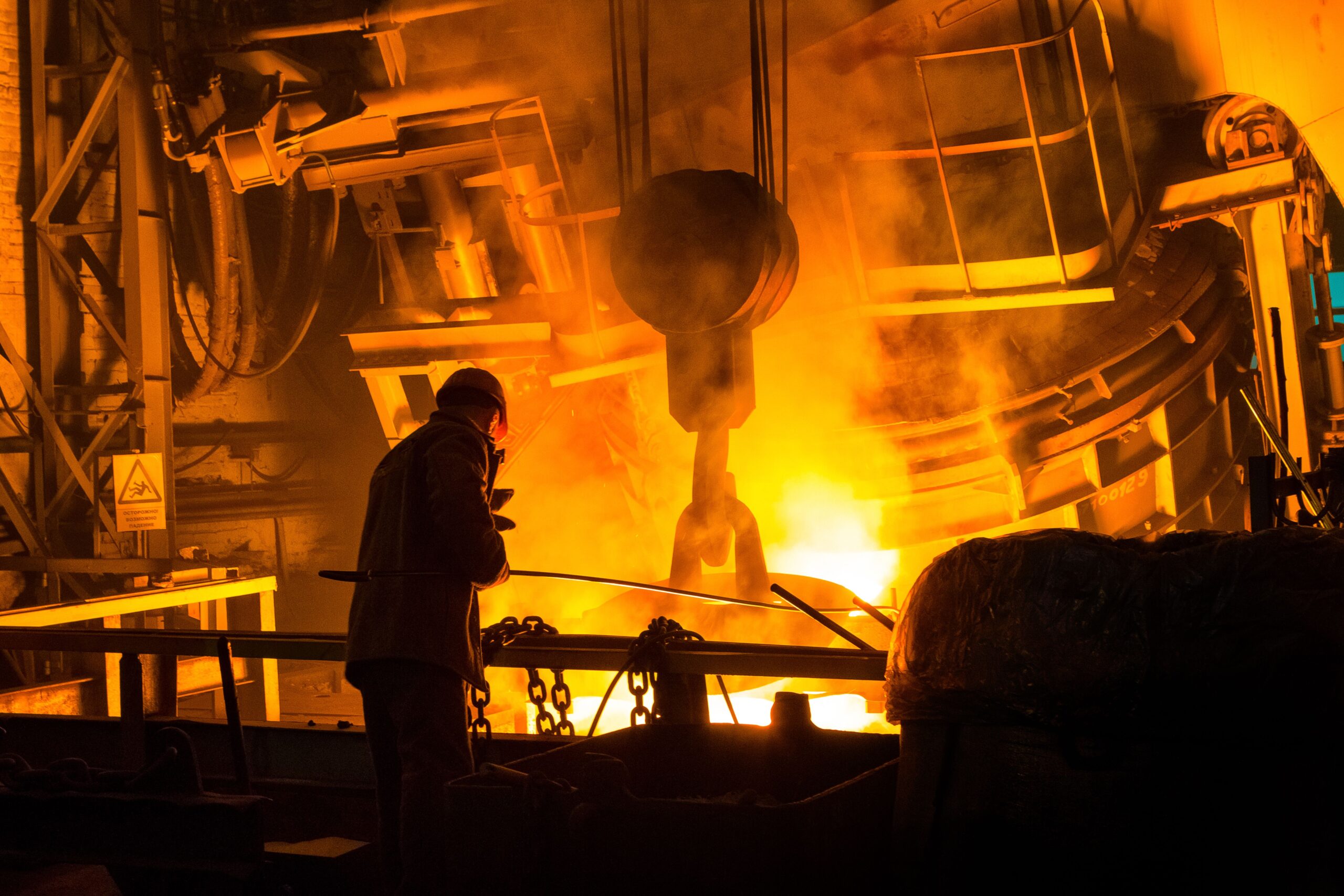



Sending new crew members underground or onto a live pit floor before they’ve handled the equipment is a liability problem, not just a training gap. That’s why more mining and heavy industry operators are turning to AR and VR development companies to build simulation-based training, remote maintenance overlays, and digital twin environments that let workers make their mistakes in a headset instead of on site. A 2022 GlobalData report on augmented reality in mining projected that enterprise use cases would drive the majority of AR revenue growth through 2030, with mining named as one of the sectors leading that shift.
Read on to find the best AR and VR development companies for the mining and heavy industry sectors.
| Company | Location | Focus Area | Platforms |
|---|---|---|---|
| Treeview | United States | Custom enterprise AR/VR for industrial training | Meta Quest, Apple Vision Pro, HoloLens |
| LlamaZoo | Canada | Mine planning and data visualization in VR | Meta Quest, desktop VR |
| MetaVRse | Canada | XR agency work across heavy industry clients | WebXR, Meta Quest |
| DevDen Solutions | India | VR equipment and emergency-response training | Meta Quest, HTC Vive |
| Fusion VR | India | Industrial VR/AR for plant safety and maintenance | HoloLens, Meta Quest |
Top XR Providers Serving the Mining and Heavy Industry Sector
1. Treeview
If a mining operator needs a training environment that matches the actual geometry of their site rather than a generic mine template, Treeview is built for that job. The studio builds custom AR and VR applications for enterprise clients, and its industrial training work spans equipment operation, safety drills, and digital twin visualization that mirrors a client’s real machinery and layout rather than a stock 3D asset library.
Treeview’s enterprise delivery model means projects go from prototype through full deployment with a dedicated team, and its platform support covers Apple Vision Pro, Meta Quest for Business, and HoloLens 2, so operators aren’t locked into a single hardware ecosystem as their fleet changes.
Focus area: Custom enterprise AR/VR for industrial training
Platforms: Meta Quest, Apple Vision Pro, HoloLens
Best fit: Operators who need site-accurate simulations, not templates
2. LlamaZoo
Mine planning teams juggling geological data, equipment layouts, and multiple stakeholders spread across time zones are the reason LlamaZoo built its Mine Life VR product. Rather than treating VR as an add-on to existing planning software, LlamaZoo designed its platform specifically to pull in real mine data sets and let engineers, surveyors, and project managers walk through a proposed layout together before a single piece of equipment moves.
That data-first approach is what separates LlamaZoo from studios that build one-off training experiences: its tools are meant to plug into a mine’s ongoing planning cycle, not just serve a single onboarding cohort.
Focus area: Mine planning and data visualization in VR
Platforms: Meta Quest, desktop VR
Best fit: Engineering and planning teams coordinating across sites
3. MetaVRse
Toronto-based MetaVRse built its reputation as an XR agency serving a wide client base before heavy industry became one of its core verticals, and that breadth shows in how the team approaches new mining and industrial briefs. Rather than a narrow training-only offering, MetaVRse builds toward whatever combination of AR, VR, and WebXR delivery fits a client’s constraints, including browser-based deployment for teams that can’t standardize on a single headset.
That flexibility comes with a tradeoff worth knowing upfront: MetaVRse isn’t a mining-only specialist, so buyers should expect a discovery phase to translate general XR expertise into site-specific requirements.
Focus area: XR agency work across heavy industry clients
Platforms: WebXR, Meta Quest
Best fit: Operators wanting flexible delivery across web and headset
4. DevDen Solutions
Underground drill operators and emergency-response crews are the two groups DevDen Solutions builds most of its mining simulations around, and the studio’s approach leans heavily on customizing scenarios to a client’s specific equipment and standard operating procedures rather than shipping generic modules. Its library covers drill operation, machinery handling, and crisis scenarios like fires and flooding, all built to be adjusted for a given site’s actual protocols.
Because DevDen works across mining, defense, and other high-risk verticals, its team brings cross-industry insight into how simulation-based training gets adopted by workers who are skeptical of new tools, which shows up in how its scenarios are paced and structured.
Focus area: VR equipment and emergency-response training
Platforms: Meta Quest, HTC Vive
Best fit: Sites prioritizing safety and emergency-response simulation
5. Fusion VR
Plant maintenance teams that need to visualize wear on heavy-duty components before a failure happens are a good match for Fusion VR’s approach, which grew out of work with nuclear, power, and mining clients across India. The studio’s AR and VR builds tend to focus on operator training and maintenance visualization rather than pure onboarding content, giving experienced technicians a way to rehearse rare failure scenarios that don’t come up often enough to train for on the job.
Fusion VR’s client list includes government research bodies and industrial manufacturers, which points to a team comfortable navigating longer procurement cycles and compliance-heavy environments.
Focus area: Industrial VR/AR for plant safety and maintenance
Platforms: HoloLens, Meta Quest
Best fit: Regulated industrial sites needing maintenance-focused training
Choosing the Right Partner
Picking an XR partner for a mining or heavy industry project comes down to matching the vendor’s specialty to the actual risk you’re trying to reduce. A studio built for planning visualization solves a different problem than one built for emergency-response drills, and a generalist agency will need more ramp-up time than a specialist that already understands underground operations. Companies weighing a vendor for this kind of work should also look at how XR partners approach warehouse and logistics operations, since a lot of the same equipment-simulation and remote-guidance techniques carry over from the pit to the yard.
Before signing a contract, ask each vendor to walk through a past project that matches your specific hazard profile, not just their industrial portfolio in general.
Bookmark this guide to make a well-informed decision. If you want to add your company to this list, drop us a line or submit a form in the Best Choices section. After a thorough review, we’ll decide whether it’s an appropriate addition.