
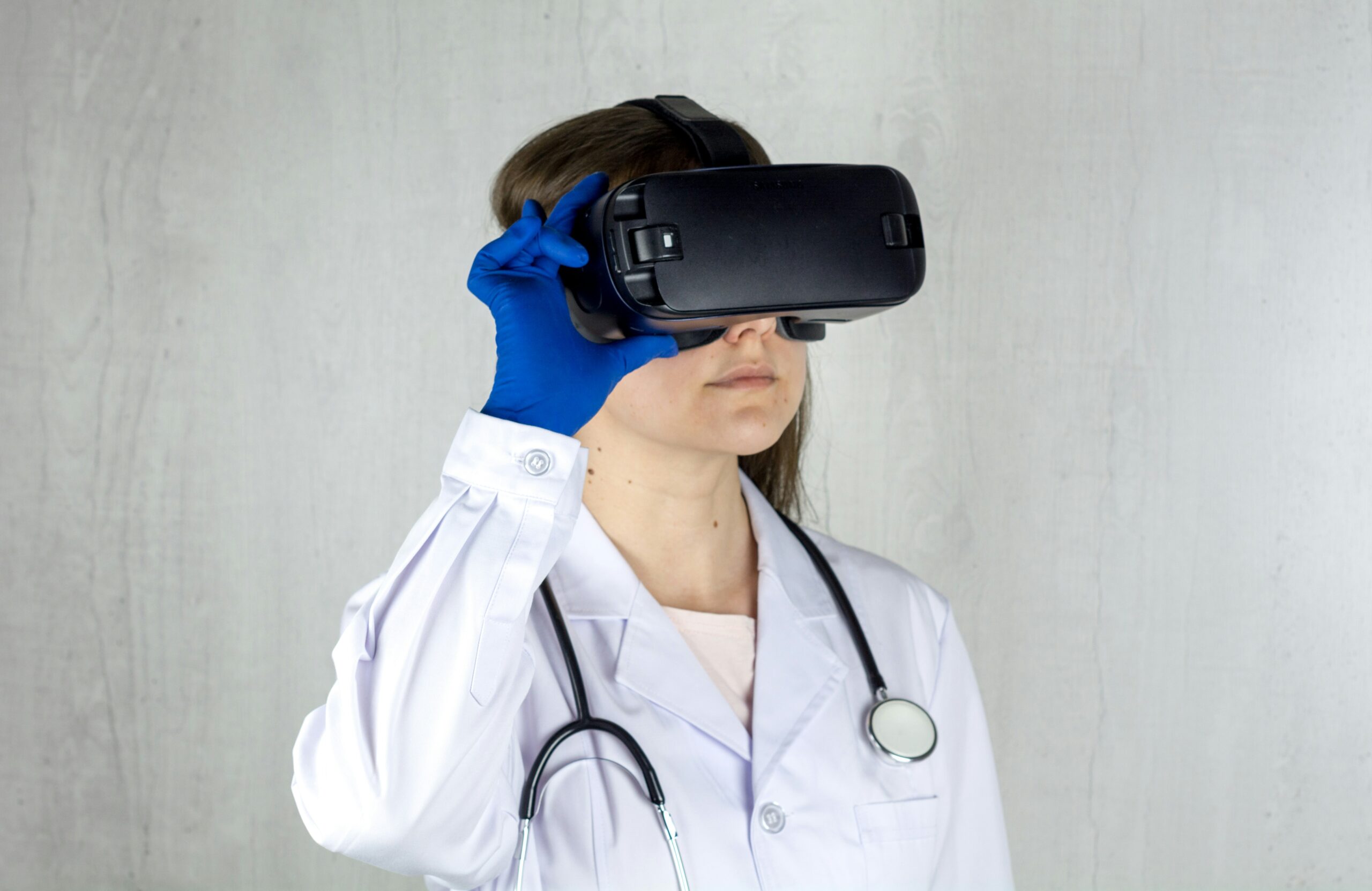



Medical training is hard to fake. A learner can watch a video ten times and still freeze when a patient scenario changes fast. XR helps most when it gives people a safe place to repeat decisions, make mistakes, and understand what should happen next.
The companies below work in different corners of this space. Some build custom training tools for medical device teams. Others focus on ready-made platforms for schools, hospitals, and simulation programs. Together, they show why the best XR development companies for medical training and simulation are usually the ones that understand the training problem before they talk about headsets.
XR Teams Built Around Medical Simulation And Training
1. Treeview Studio
Treeview is a good fit for healthcare teams that need custom spatial software rather than a fixed product. Its healthcare work includes Medtronic’s Micra XR Trainer, Daiichi Sankyo’s CardioCompass, and Inviewer, alongside wider enterprise AR, VR, and MR projects. That makes the studio useful for teams looking at XR development companies for medical training where design, medical content, and engineering all need to line up.
The appeal is that Treeview can stay with a project from early product thinking through build and rollout. For medical training tools, that matters because the experience has to feel clear, safe, and usable — not just technically impressive.
2. Oxford Medical Simulation
Oxford Medical Simulation is a good fit for training teams that want learners to think through a case, not just watch one play out. Its VR scenarios ask users to assess a patient, make decisions, and deal with the outcome of those choices. For teams comparing virtual reality medical simulation tools, that focus on clinical judgment is the main reason to look at OMS.
It also helps when a school or hospital needs the same case practiced many times across different learner groups. Students and staff can repeat serious scenarios, review what went wrong, and build confidence without booking a full simulation lab for every session.
3. Vantari VR
The clinical background behind Vantari VR shows most clearly in its procedural training work. Doctors, nurses, students, hospitals, universities, and medical device teams can use it to rehearse clinical steps before doing them in person. For teams using VR in medical training, that practical focus is the main reason to look at Vantari.
Its platform also gives educators performance feedback, so training is not just about finishing a module. That helps teams spot where learners need more practice before they move into a real clinical setting.
4. ORamaVR
ORamaVR works best when a medical team wants to shape its own XR training content instead of relying only on a fixed simulation library. Its platform supports authoring, hosting, ready-made scenarios, and custom builds for hospitals, simulation centers, and medical device companies. That makes it a good fit for medical VR training programs where the details of each procedure or case matter.
There is also a research side to the company’s work, which helps the product feel more grounded. For complex procedures, that matters because one small interaction can change whether the training feels useful or artificial.
5. Virti
Virti brings immersive training closer to communication, pressure, and human behavior. Healthcare teams can use it for high-risk scenarios, emergency practice, soft skills, and AI role-play. That is helpful when medical simulation is not only about what a learner does with their hands, but how they think and respond under stress.
It also suits distributed teams. A learner can repeat a difficult scenario, get feedback, and build confidence before facing a similar moment with a patient, colleague, or family member.
6. VRpatients
For educators who need patient cases quickly, VRpatients removes much of the usual custom-development wait. Training teams can create cases around interviews, assessment, diagnosis, and decision-making across VR, MR, and web-based formats. For schools and hospitals that need flexible content, that can remove a lot of friction.
Its strongest point is ownership. Educators can adjust scenarios to match a course, a competency, or a local training need instead of relying only on a vendor’s fixed case library.
7. UpSkillAI
High-risk clinical training is where UpSkillAI feels most relevant. The platform supports VR-based practice for areas such as labor and delivery, emergency care, operating room work, protocol training, and competency assessment. When teams compare the best XR developers for medical education, UpSkillAI stands out because its product is tied to training outcomes, not just content delivery.
It also gives organizations a way to manage and review training across groups of learners. That matters when a program needs consistency across departments, sites, or clinical teams.
Choosing A Partner That Fits The Training Goal
The right XR partner depends on what you are trying to teach. A surgical procedure, a rare emergency, a patient conversation, and a diagnostic case all need different pacing, feedback, and review. A good vendor should be able to explain those choices clearly.
The safest shortlist is not built around the most dramatic demo. It is built around useful practice, medical review, learner safety, and proof that people can return to the tool more than once. If a company can show how the simulation supports real learning, it is much easier to trust the rest of the pitch.